Sustainable Wine Cellars: Eco-Friendly Design Ideas
Sustainable wine cellars begin with thoughtful planning long before the first rack is installed. Materials are important, but long-term performance often depends more on how the room is built, insulated, cooled, and maintained. A well-designed cellar can reduce energy demand, support stable storage conditions, and limit unnecessary rebuilds or equipment strain for years to come.
For designers exploring sustainable wine cellars, the goal is to balance responsible construction with dependable wine storage and refined aesthetics. Modern systems now make it possible to create custom wine cellars that support energy efficiency without sacrificing presentation, accessibility, or collection growth.

The Foundation of an Energy-Efficient Wine Cellar
Wine cellar design ideas tend to focus heavily on finishes, shelving, or lighting. But sustainable wine cellar planning starts earlier—with the room itself.
Cellar location and exposure can significantly affect cooling demand and long-term operating costs. Underground and lower-level spaces generally experience fewer temperature swings than fully above-ground rooms because surrounding earth and interior building mass help stabilize conditions.
For residential projects, this often makes basements, lower levels, and interior-facing rooms attractive choices for an eco-friendly wine cellar. These locations may reduce the workload placed on the cooling system, particularly during seasonal heat changes.
A few practical design choices can also improve long-term efficiency:
- Limit unnecessary exterior-wall exposure when possible
- Reduce oversized glass expanses in warm or sun-facing areas
- Keep room layouts compact rather than overly fragmented
- Avoid placing wine rooms directly beside heat-generating spaces
Even small decisions during the planning phase can influence temperature control, humidity stability, and long-term cooling performance.

Reduce Cooling Load Before Selecting Equipment
One of the most effective ways to improve energy efficiency in sustainable wine cellars is reducing the room’s thermal load before selecting a cooling system. A properly built envelope helps maintain stable wine storage conditions while reducing strain on climate control equipment.
Focus on Insulation and Air Sealing
Wine cellar construction guidance commonly recommends strong insulation values, sealed penetrations, and vapor barriers on the warm side of the wall assembly to help control heat transfer and moisture intrusion. Proper sealing around doors, corners, and utility openings can also help improve temperature control and humidity stability over time.
Treat Glass as a Thermal Design Decision
Glass doors and wine wall displays can create a dramatic focus in a modern cellar, but glass also increases heat transfer if the enclosure is not engineered correctly. Dual-pane insulated glass and quality seals can help support more stable cellar conditions.
Use Low-Heat Lighting
Lighting choices also affect cellar performance. LED lighting is commonly recommended because it generates far less heat than older fixtures, helping reduce the workload placed on the cooling system over time.
These construction details may not be the most visible cellar features, but they often have a major impact on long-term performance and energy demand.
Choose Climate Control That Matches the Space
A sustainable wine cellar does not necessarily require the smallest cooling system. It requires the right one.
Improper sizing can create uneven temperature control, humidity issues, short cycling, and excess energy use. Cooling-unit selection should account for factors such as room size, insulation values, glass exposure, ceiling height, lighting load, and surrounding conditions.
Cooling-system sizing depends on variables including construction type, insulation, glass, and room usage. It’s best to rely on proper load calculations rather than estimates alone.
For builders and designers, this reinforces an important point: sustainable wine storage depends on the relationship between the room and the equipment, not just the equipment itself.
Modern cooling systems can also support energy-conscious wine room design in several ways, depending on the system, such as:
- Variable airflow management
- Remote temperature monitoring
- Humidity management
- Zoned cooling strategies
- Ducted or split-system configurations for quieter operation
Airflow planning is important as well. Proper supply and return airflow affects cooling performance, noise levels, and moisture management. Decorative millwork, dense wine racks, or blocked ventilation paths can reduce system efficiency if airflow is restricted.
The best-performing sustainable wine cellars are usually the result of coordinated planning between cellar designers, contractors, HVAC professionals, and homeowners early in the process.

Durable Materials for Sustainable Wine Cellars
Eco-friendly interior design often focuses on reclaimed or recycled products, but long-term durability may have an even greater impact on sustainability. Materials that remain stable in cellar environments can reduce replacement cycles, minimize waste, and support dependable wine storage for years to come.
For custom wine cellars, material selection should balance appearance, structural stability, moisture resistance, and future adaptability. The right materials can help support both energy efficiency and long-term cellar performance.
- Metal wine racks: Metal systems are frequently used in modern wine cellar layouts because they provide strong storage capacity with relatively open visual profiles. Label-forward wine wall displays can also improve bottle visibility without requiring bulky cabinetry or oversized structures.
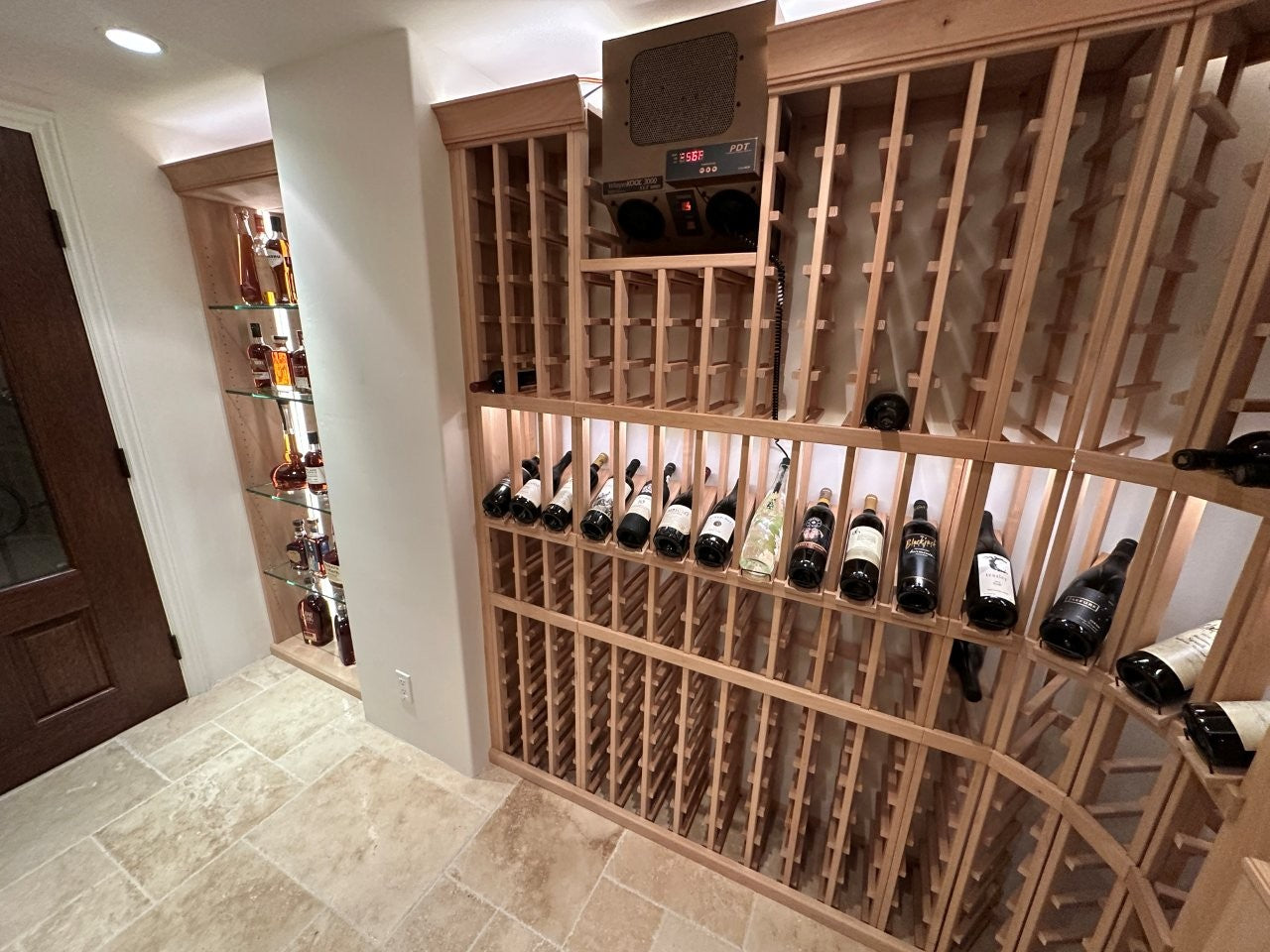
- Wood wine racks: Wine Racks America options such as White Oak, Walnut, and Sapele Mahogany remain popular choices for wine room design because of their durability and refined appearance. Wood systems work especially well in contemporary, transitional, and traditional cellar environments.
- Modular wine storage: Expandable systems can support sustainable wine cellars by reducing the need for full tear-outs as collections grow. Our InstaCellar™ systems are designed for modular expansion and integration with additional storage sections over time.
- Protective finishes: Water-based finishes such as WineSafe™ Satin Sealant help protect wood surfaces while maintaining an odor-free storage environment.
Thoughtful material selection also supports better long-term usability. A cellar built with durable wine racks, adaptable layouts, and stable finishes is less likely to require major reconstruction as storage needs evolve.
Wine Racks America has also seen increased interest in unfinished wood wine cellar systems over stained or satin-finished options, particularly among homeowners looking for a more natural material aesthetic and simpler design palettes.
Design for Adaptability and Expansion
A wine cellar that becomes obsolete after a few years is not an efficient long-term investment.
One of the strongest eco-friendly wine cellar strategies is designing for future adaptability from the beginning. Collections evolve, bottle formats change, and homeowners often want additional display capacity over time.
Modular wine storage systems help support that flexibility. Wine cubes, stackable bins, wall-mounted racks, and expandable sections allow homeowners and designers to reconfigure layouts without removing an entire installation.
Wine Racks America’s modular systems are designed to integrate with additional storage sections and expanded configurations as collections grow.
This approach works particularly well in:
- Modern wine cellar layouts
- Under-stair wine storage
- Multi-phase construction projects
- Hospitality wine displays
- Compact urban wine rooms
Adaptable storage planning also supports better space efficiency. Instead of overbuilding storage on day one, homeowners can create a phased approach that evolves alongside the collection.

Build a Sustainable Wine Cellar With Long-Term Value in Mind
The best sustainable wine cellars combine thoughtful construction, efficient climate control, adaptable storage, and durable materials into one unified environment. A carefully planned cellar can support wine preservation and remain visually relevant for years to come.
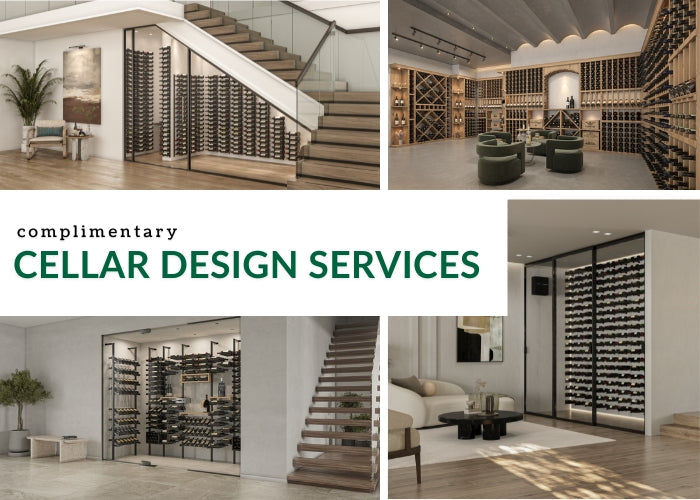
From modular wood wine racks to modern wine wall systems and climate-control solutions, the right design approach can help create a cellar that feels refined while supporting more responsible building practices. Ready to realize your wine cellar design ideas? Request a complimentary custom wine cellar design and work with our team to create a storage solution built for long-term performance.