


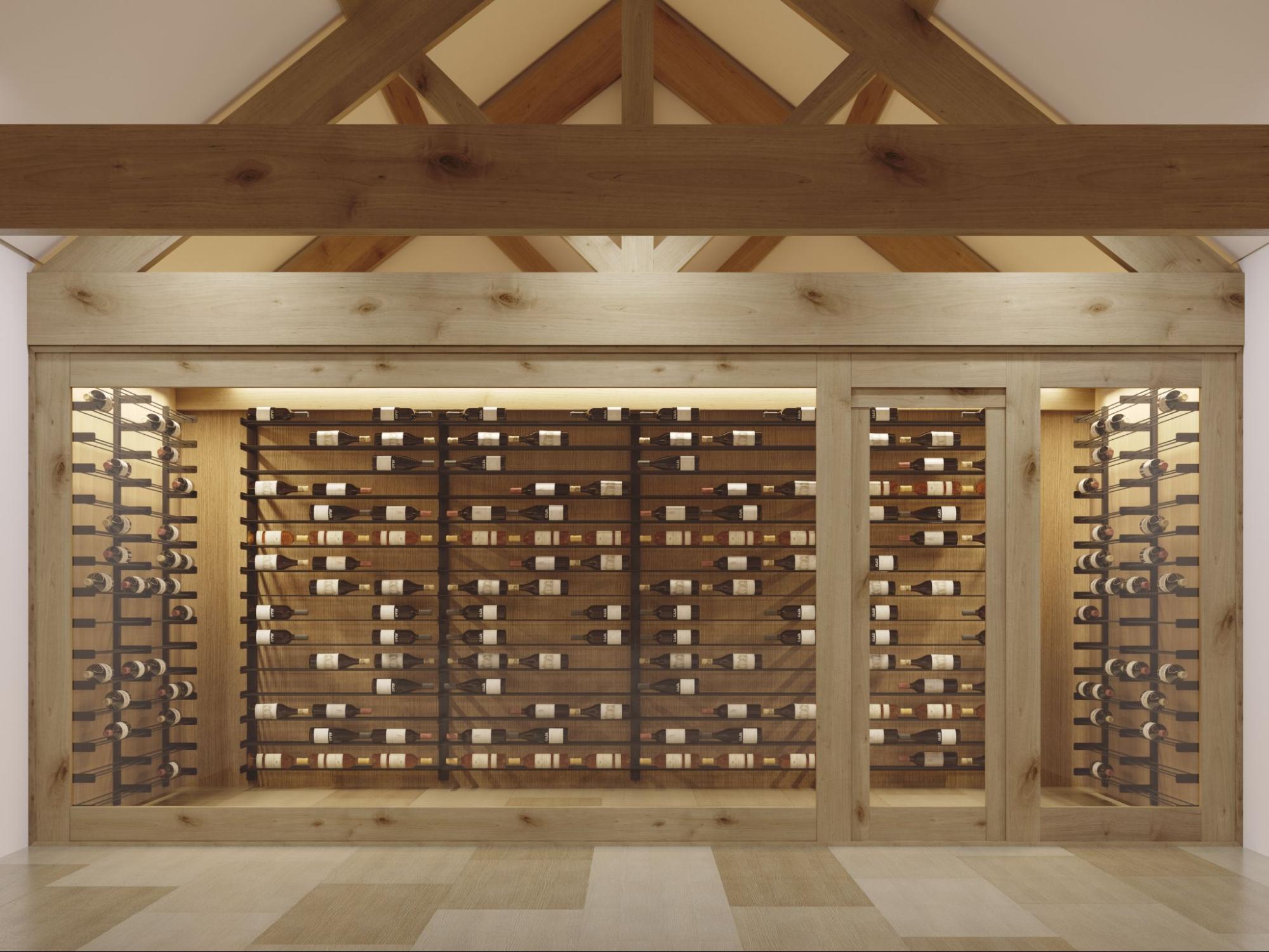
Planning Retail Wine Displays for Wineries and Wine Shops
A tasting room presenting eight wines has different display needs from a wine shop carrying 800 SKUs. The best retail wine display reflects how wine is actually sold in that business, from the path a tasting-room guest takes after a flight to the way a shopper searches a large assortment.
Before choosing retail wine racks, decide which bottles need attention, how much stock must remain accessible, and how often the assortment is likely to change.

Why Retail Wine Displays Matter
Retail displays help establish a hierarchy within the assortment. Instead of giving every bottle equal emphasis, a winery can distinguish its newest vintage from library releases, while a shop can create defined areas for staff picks or seasonal categories.
Inventory depth is also important. A winery may need several bottles or cases behind each displayed wine, while a specialty shop may carry only a few bottles of many different SKUs.
Understanding Your Space and Customer Flow
Think about what customers are doing immediately before they reach the display. In a tasting room, someone may finish a flight and want to buy a wine they just sampled. Those bottles should be easy to identify without requiring a second tour of the room.
In wine shops, some customers arrive looking for a specific bottle, while others begin with a broad request such as a region, style, or price range. The layout should accommodate both behaviors.
As you plan your retail space:
- Connect tastings to purchases. Consider grouping the current tasting lineup where guests can find it easily after a flight.
- Plan for replenishment. Reserve stock should be easy for employees to locate and move onto the sales floor.
- Account for inventory depth. Decide how many bottles of each SKU should be accessible before assigning display space.
For more info on construction considerations, explore our five tips for building a retail wine cellar.
Mapping High-Traffic Zones
Use prominent areas for new vintages, limited releases, or seasonal selections. Library wines and other premium inventory may be better suited to a quieter feature area.
Creating Focal Points
Give focal displays a specific job. A winery could rotate one with each new release, while a retailer might use the same location for a regional feature or producer event.
For a compact promotion, Wine Racks America’s Retail Point of Purchase Display 4X8 holds 32 bottles and can create a compact feature area for a new release or promotion.
Choosing the Right Display Types
Instead of selecting one wine rack style for the entire store, match each fixture to the merchandise it needs to support.
|
Retail need |
Display approach |
|
Introduce a new release or staff pick |
Label-forward feature display |
|
Carry deeper stock of popular SKUs |
Display positions paired with bins or case storage |
|
Handle magnums or unusual bottles |
Open bins or flexible shelving |
|
Add capacity as the assortment grows |
Modular wall or freestanding systems |
|
Protect slower-moving premium wine |
Climate-controlled display or adjoining storage |
The Retail Open Bin Display is useful where bottle formats and inventory depth vary. It holds up to 199 bottles, with a middle cubby that can accommodate magnums and other specialty bottles.
Label-Forward vs. Traditional Racking
Label-forward positions help customers recognize featured bottles quickly, while cork-forward racks provide greater storage density. Retailers can combine both based on the role of each section. For more detail, see our guide to label-forward wine displays.
Modular and Scalable Systems
Retail display needs change with new releases and seasonal demand. A winery may need more room when a new vintage launches. A shop may expand sparkling wine for the holidays and reassign the same area later.
Modular retail wine display racks can accommodate those changes without fixing every category in place. Wine Racks America’s Commercial Aisle Rack, for example, starts with a 180-bottle configuration and can expand to 360 bottles with one extension or 540 with two.
Lighting, Signage, and Visual Merchandising
Signage should help a customer make sense of the assortment rather than compete with the bottles.
- Make navigation and pricing clear. Customers should quickly understand how the store is organized and be able to find the price of each wine.
- Use shelf-talkers selectively. Add them where they provide useful context, such as for a staff pick, new release, or wine featured in a tasting.
- Choose lighting for emphasis. Draw attention to selected bottles without exposing wine to direct sunlight or unnecessary heat.
For additional design ideas, check out our overview on modern wine storage design.

Planning Displays That Grow With Your Business
Rather than designing around the maximum bottle count, decide which parts of the retail environment should remain permanent and which should be easy to change.
- Modular systems support changing categories and expansion.
- Custom wine racks suit unusual dimensions or branded architectural features.
- Phased buildouts let businesses add capacity as needed.
Wine Racks America offers modular retail systems along with free 3D store design support. Explore our retail wine racks and display systems to plan a layout around your space.
FAQs
How do you design a wine display that increases sales?
Start with the products the business has a reason to feature rather than assigning equal display space to every SKU. Make those bottles easy to identify, compare, and purchase, then keep replenishment stock close enough for the display to remain full.
What is the best way to arrange wine bottles on retail shelves?
Use an organizing system that matches how customers shop the assortment. A winery may organize around its tasting lineup and releases, while a large retailer may need a consistent regional, varietal, or style-based structure.
Should retail wine be displayed label-forward or cork-out?
Both have a role. Label-forward presentation helps customers identify featured bottles quickly, while cork-forward racking uses space more densely.
Does displaying wine upright damage the bottles over time?
Upright display can be appropriate for faster-turning inventory. If natural-cork bottles may remain unsold for many months or be held for years as library or collectible inventory, horizontal or appropriately angled storage is the better choice.
How much does it cost to set up a retail wine display?
Cost depends on capacity, materials, dimensions, fixture type, and the need for custom work or climate control. Establish the bottle count and layout requirements first so modular and custom options can be compared accurately.