Your Guide to Label-Forward Wine Displays
A label-forward wine rack turns each bottle so the label faces the room, making the collection easier to browse and more visually striking. Instead of showing only corks or bottle ends, this style puts favorite bottles on display.
For collectors, retailers, and designers, label-forward wine displays offer a refined way to make wine storage part of the space. They work especially well in visible spaces that value optimal wine bottle presentation, from residential racks to commercial displays.

What Makes a Label-Forward Display Different?
Traditional wine racks often focus on capacity, with bottles stored cork-forward in tight rows. Label-forward displays shift the focus toward visibility. A label-forward wine rack stores bottles with the label facing outward, which makes each bottle easy to identify while still supporting proper wine storage.
This makes the format useful for:
- Showcasing favorite bottles
- Grouping wines by region, producer, or varietal
- Making bottle selection faster for anyone using the display
- Creating a modern wine wall with a clean, display-driven look
- Turning wine storage into part of the room design
Start With the Sightline
Before choosing a wine display rack, decide where it will be seen from most often. A label-forward layout works best when it faces the natural viewing path of the room. In a home, that may be the wall guests naturally see from a dining area or nearby entertaining space. In a commercial space, the strongest placement is often near the point where guests first browse or ask about wine.
Think through these planning points before selecting the rack layout:
- What bottles should be seen first?
- Which rows will sit closest to eye level?
- How much clearance is needed to remove bottles comfortably?
- Will the display be viewed straight on or from an angle?
- Does the wall need space for lighting, glass, cooling, or cabinetry?
A wine display wall should feel easy to view and easy to use. If the bottles are difficult to reach or the labels are hard to read, the layout may look good in theory but fall short in daily use.
Choose the Right Layout
Label-forward wine displays can be compact, full-height, or integrated into a larger custom wine cellar. The right layout depends on multiple factors, including bottle count and room size.
Wall-Mounted Displays
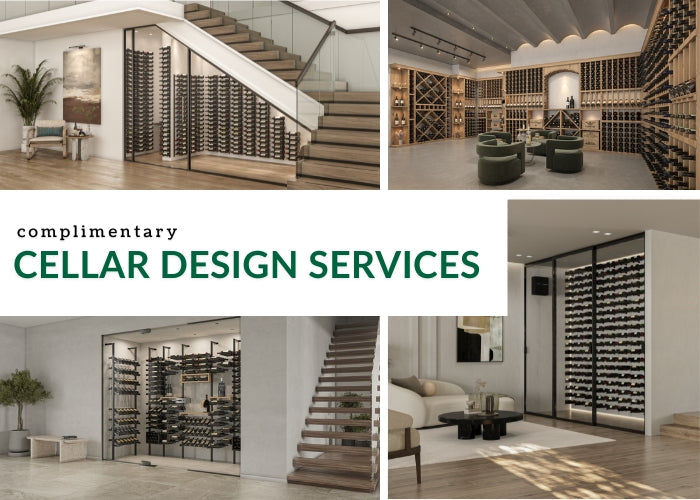
Wall-mounted wine wall systems are a strong choice for dining rooms, home bars, lounges, and compact cellars. They keep bottles visible without requiring a large footprint. This approach also works well for a retail wine display where featured bottles need to be easy to see.
Floor-to-Ceiling Displays
A floor-to-ceiling display creates a more dramatic feature. This format works well in large residential cellars and hospitality spaces where the collection should become a focal point. The height adds visual impact while making use of vertical space. VintageView floor-to-ceiling systems can create single- or double-sided installations using metal frames, posts, and label-forward bottle supports.
Modular Displays
Modular wine racks give collectors and designers more flexibility. A modular layout can expand vertically or horizontally as the collection grows. It can also be reconfigured more easily than a fixed built-in system, which is useful for homeowners and trade professionals planning long-term storage. Wine Racks America offers modular systems such as GrandCellar™ and InstaCellar™.
Mixed Storage Layouts
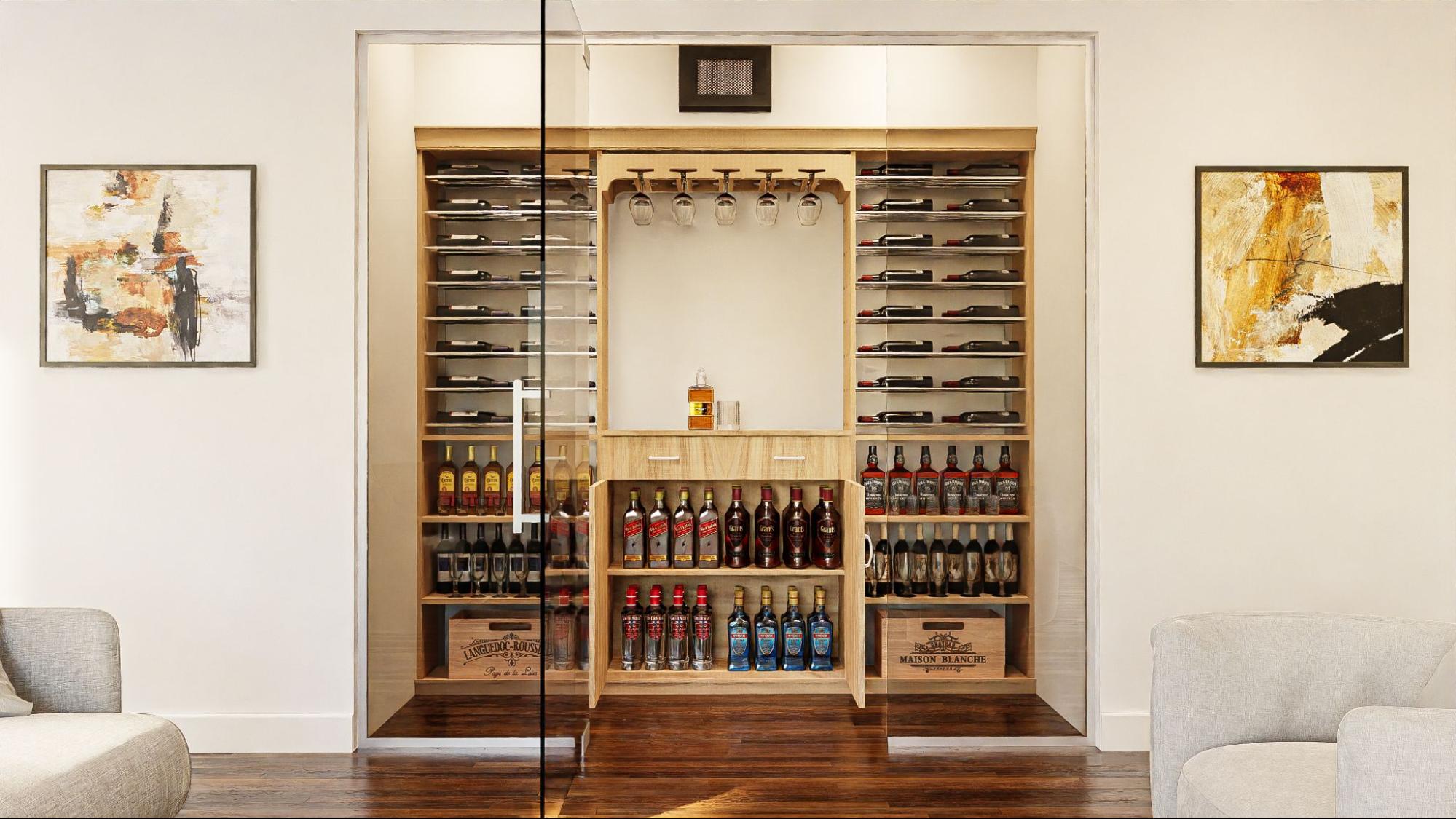
Not every bottle needs to be label-forward. Use label-forward racks for standout bottles and traditional racks, bins, or cubes for higher-capacity storage. This keeps the main display refined while giving the collection room to grow. GrandCellar™ mixed systems, such as The Chevron Cove, show how cork-forward storage and label-forward displays can work together in one wine wall or cellar layout.

Balance Display and Capacity
Label-forward wine displays usually require more wall space per visible bottle than cork-forward storage. That is part of the design tradeoff. A display-driven layout is not always about fitting the most bottles into the smallest area. It is about making the right bottles visible.
A smart wine storage display can divide the collection into zones:
- Featured bottles in label-forward rows
- Everyday bottles in standard racks
- Bulk storage in bins or cubes
- Larger-format bottles in dedicated spaces
- Ready-to-drink bottles near the most accessible area
This approach helps homeowners enjoy the collection more easily. It also supports wine merchandising in restaurants and retail environments, where a clear display can guide customers toward featured bottles, premium selections, or seasonal recommendations.
Plan Around Bottle Size
Bottle size should guide rack selection. Standard Bordeaux bottles are common, but many collections include Burgundy, Pinot Noir, Champagne, sparkling wine, and magnum bottles. These shapes may need wider spacing, deeper support, or separate display areas.
Before finalizing the layout, review the bottles that will actually go into the display. A collector focused on Cabernet may need a different layout than someone who buys Champagne or large-format bottles. For commercial wine storage, staff access also matters. The display should look polished while still supporting service and inventory organization.
Protect the Wine
For long-term storage, place the display away from direct sunlight, heat, and vibration. Climate-controlled wine storage should stay near 50–60°F with 50–70% relative humidity. Non-cooled displays are best for bottles you plan to open soon.
Lighting can improve label visibility, but it should not add unnecessary heat or glare. Soft, well-placed lighting helps the labels stand out while keeping the overall look clean.
Match the Rack Style to the Room
Rack material and finish shape the feel of the entire display. Wood can add warmth and works well in transitional or traditional spaces. Metal can create a sleek look for a modern wine wall. Wood-and-metal combinations can feel refined without making the room look overly formal.
Decorative wine racks should still support the collection properly. Look for stable bottle support, clean spacing, easy access, and a layout that keeps labels facing the same direction. Repeated rows often create the strongest visual effect because the display feels organized instead of busy.

Build a GrandCellar™ Label-Forward Display
GrandCellar™ label-forward wine displays are designed for collectors and design professionals who want horizontal bottle storage with labels facing forward. The collection combines premium wood options with anodized aluminum metal displays, making it a strong option for storing wine in residential and commercial settings.
These label-forward racks also work with GrandCellar™ racks, bins, and cubes, so they can be part of a larger custom wine storage plan. Full-depth construction helps support each bottle, while modular height options make it easier to shape the display around the space.
For a polished layout with clear label visibility, explore GrandCellar™ label-forward wine racks and other display-focused options available through Wine Racks America. Request free design support to start planning a layout that fits your collection.