Wine Rack Safety in Homes With Kids and Pets: What to Watch For

Creating thoughtful wine storage is about more than presentation. In households with young children and pets, safe wine rack design is vital. Bottles are heavy, glass is fragile, and even a small amount of instability can lead to preventable accidents.
The good news is that you do not have to give up style to create a safer wine rack. With the right planning, wine racks can look refined while supporting safety in the home.
Below are practical safety tips for wine racks, so you can protect your family without compromising design.
Understanding Tip-Over Risk
Freestanding wine racks are often the first choice for homeowners because they feel simple and flexible. In homes with small children, though, stability must come first.
Tall, narrow racks can become top-heavy once fully loaded. Wine bottles add significant weight. If that weight sits high or unevenly distributed, the rack’s center of gravity rises. A child pulling up on a lower bottle or a dog brushing past at speed can create enough force to shift or tip an unsecured unit.
To reduce the risk of tip-over accidents:
- Choose racks with a wide, stable base.
- Test for wobble before loading bottles.
- Level the rack properly—uneven floors increase movement.
- Anchor tall units to the wall when possible.
Remember that if a rack moves when empty, it will move more once filled.
Wall Mounting Done Right
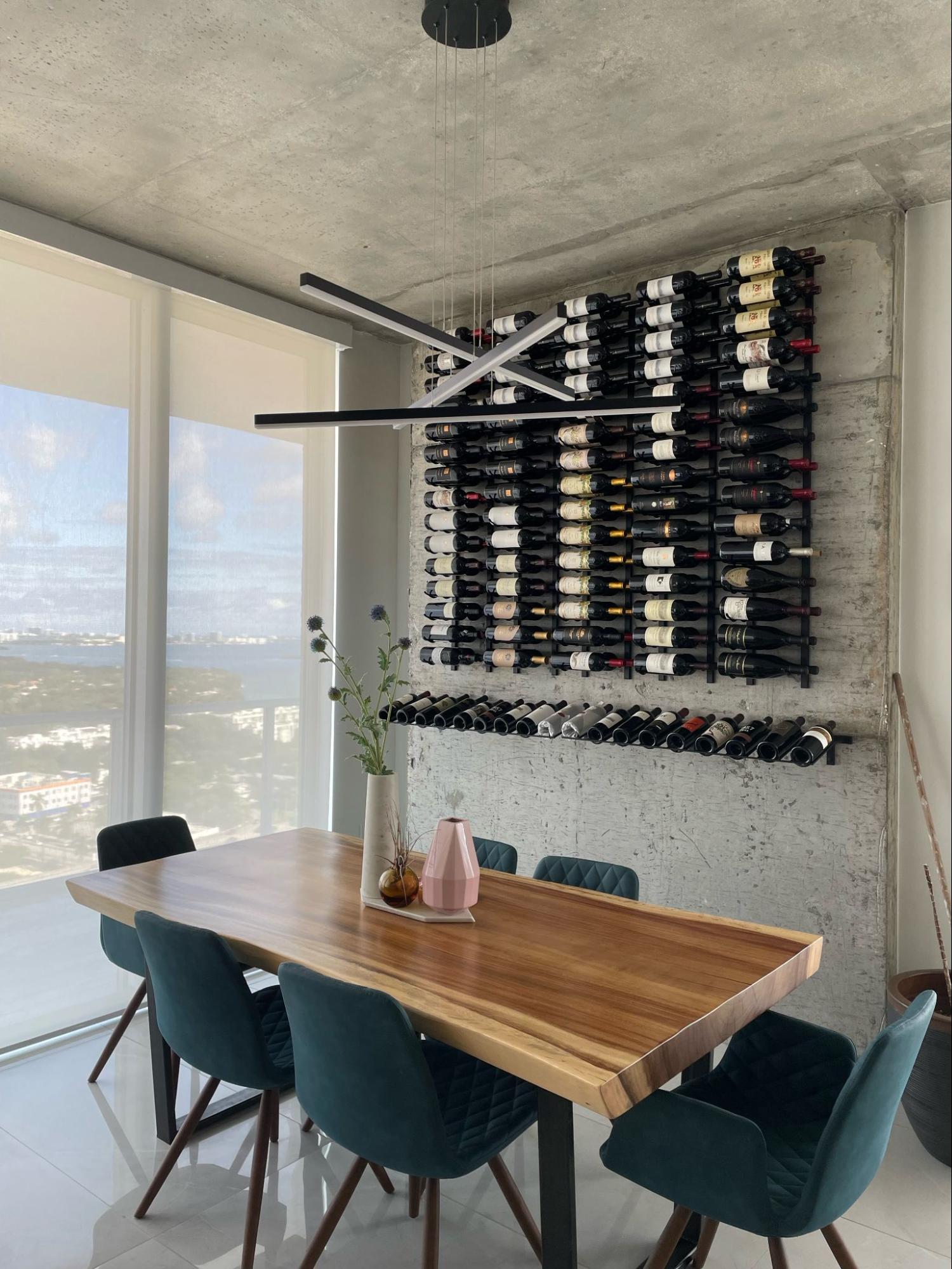
A wall-mounted wine rack is often one of the best options for home use when safety is a priority. Elevating bottles can keep them out of reach of young children and can limit direct bumping from pets.
But mounting must be done correctly. If you’re mounting into drywall, use only the manufacturer-recommended anchors and confirm the rack is rated for that install method. This is especially important for a wine display rack installed in long horizontal runs.
When installing a wall-mounted wine rack:
- Confirm stud locations before final layout.
- Use hardware rated for the load of the rack plus bottles.
- Avoid light-duty plastic expansion anchors for heavy installations.
- Recheck tightness after loading.
For homeowners considering a DIY wine rack, mounting mistakes are one of the most common safety failures. Even well-designed DIY wine rack plans can fall short if structural attachment is overlooked.
Systems such as our Vertical Wall-Mounted Wine Racks are designed for secure mounting, allowing bottles to be elevated while maintaining firm neck and base support. When properly installed, it reduces tip-over risk without sacrificing a clean, modern wine rack presentation.
Always follow the manufacturer’s instructions and consult a qualified installer if wall structure or load ratings aren’t clear.
Bottle Retention: Preventing Rolls and Pulls
Wine racks should keep bottles from rolling or sliding—either with cradle-style support along the bottle, or with neck-and-base support in label-forward systems. Shallow cradles or oversized cubbies allow bottles to roll forward or shift when bumped.
Format fit is another significant issue. Champagne and magnum bottles are wider than standard Bordeaux bottles. Forcing larger bottles into standard openings can create pressure points and poor support, increasing the risk of chipped glass or bottles slipping free.
For safer wine storage:
- Store heavier bottles in lower rows.
- Avoid overloading cubbies beyond intended capacity.
- Keep daily-access bottles out of the lowest grab zone.
- Ensure consistent spacing that matches bottle type.
The best wine racks for home use are not just visually appealing. They are engineered for consistent bottle contact and predictable loading.

Floor-to-Ceiling Wine Racks: Beauty With Boundaries
A floor-to-ceiling wine rack can create dramatic impact. In homes with pets and small children, however, it also demands greater care.
The taller the installation, the more important anchoring becomes. Long vertical runs should attach at multiple points. Modular systems are often safer than improvised extensions because they are designed for stacking and load distribution.
Consider:
- Dividing tall installations into anchored sections.
- Avoiding bottom rows in high-traffic pathways.
- Keeping climbable ledges away from adjacent furniture.
Design should never create unintended access.
Placement and Reach Zones
Even a securely mounted wine rack can become a problem if it sits in a high-activity zone where young children and pets are most likely to be active. Placement affects how often the rack gets bumped and how much leverage a child can apply to the lowest rows.
Focus on the interaction patterns that cause accidents:
- Door swings and tight clearances: A door that opens into a wine display rack can strike bottles or jolt the rack over time. Give the rack clear space outside the door arc.
- Hallway corners and pass-throughs: Pets often take corners fast, and kids move unpredictably. Exposed rack edges in narrow walkways are easier to hit, increasing the chance of dislodged bottles.
- Low rows in “kid height” zones: Toddlers naturally pull up on anything within reach. If the lowest bottles sit at that pull-up height, the rack becomes both a temptation and a leverage point. If possible, start the lowest bottle row above toddler reach height.
- Next to climbable furniture: A bench, console, or low cabinet beside the rack can turn the display into a climbing route. Keep climb-assist surfaces away from tall installations.
Built-in placements—such as under-the-stairs storage—can also reduce accidental contact because the rack sits within an architectural pocket rather than on a main circulation path.
DIY Wine Racks: Where Caution Is Essential
A DIY wine rack can be rewarding and cost-effective. The challenge is that most plans focus on appearance and dimensions, not long-term structural safety.
Safety tips for DIY builders always begin with structure, not finish. Common DIY issues include:
- Undersized fasteners
- No wall anchoring
- Inconsistent spacing that does not match bottle sizes
- Weak joints that loosen over time
If you build a DIY wine rack, test load capacity carefully before filling it. Reinforce where needed. Confirm that all connections remain tight after several weeks of use.

Choosing the Right Wine Rack Styles for Family Homes
Different rack styles offer different safety advantages.
Wall-mounted systems can lift display rows out of reach. Modular wood wine racks provide stable, predictable bottle spacing. Closed-door cabinetry can provide added separation in high-activity households, and in some cases may include lockable doors to help limit direct access by young children.
The key is selecting a system designed for long-term stability rather than improvising with decorative shelving. When evaluating wine racks for home installation, ask:
- Is this rack engineered for expansion?
- Does the mounting plan align with my wall structure?
- Are bottle openings designed for my collection?
- Will this layout still feel secure as my family grows?
Safety in the home evolves with lifestyle changes.
Safer Wine Cellars Start With Better Planning
Dedicated wine cellars often feel inherently safer because they separate storage from everyday activity. Even so, anchoring, bottle retention, and layout remain critical.
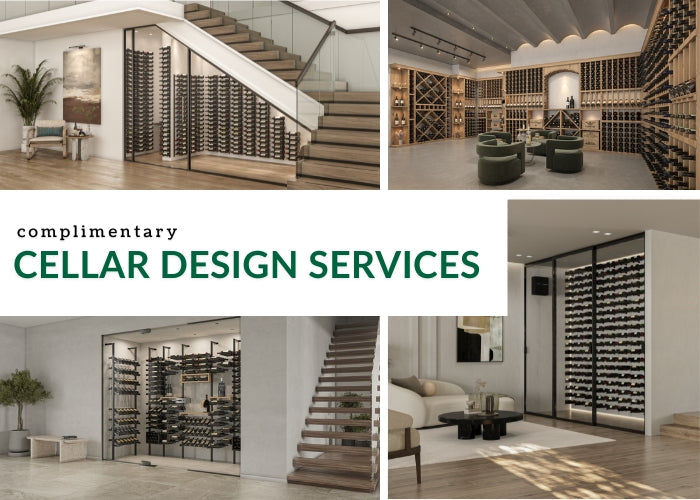
At Wine Racks America, we consider structure first. Our custom wine cellar design service helps homeowners plan around:
- Wall composition and stud placement
- Bottle formats and weight distribution
- Modular expansion without unstable add-ons
- Placement that respects traffic flow and reach zones
Rather than adapting a generic rack to your space, we design wine storage that integrates securely from the beginning.
A Quick Wine Rack Safety Check
Walk through this simple audit:
- Does the rack wobble when gently pushed?
- Is it anchored to structural backing?
- Are heavier bottles stored low?
- Do bottles sit fully supported along their length?
- Is there door or traffic clearance?
- Are mounting points secure and tight?
If any answer gives you pause, adjustments are worth making.

Choose Wine Racks America for Safer Wine Racks
Wine racks can be both refined and responsible. With thoughtful placement and well-engineered bottle support, you can enjoy beautiful wine storage while strengthening safety in the home.
If you are unsure about the right wine rack styles for your household, our custom design team is here to help.