When to Choose a Self-Contained Wine Room vs. Built-In Display
Planning wine storage often comes down to two distinct paths: creating a dedicated home wine room or integrating a built-in wine display into the living space. Each option brings different requirements for installation and performance, so the right approach depends on the space, the collection, and the overall direction of the project.

What Is a Self-Contained Home Wine Room?
A home wine room is a fully enclosed space designed to maintain stable storage conditions. It functions more like a traditional wine cellar, with insulation, vapor barriers, and a dedicated cooling setup designed to manage temperature and support proper storage conditions.
This approach treats the room as a controlled environment rather than a decorative feature.
Where it works best
- Basements, spare rooms, or under-stairs areas
- Larger or growing collections
- Long-term storage and aging
What defines it
- A sealed environment with insulation and proper construction
- A dedicated wine cellar system sized to the room
- Flexible layouts using modular racks or floor-to-ceiling storage
A wine room at home is ideal when preservation takes priority. It can help protect the collection from daily temperature swings, light exposure, and household activity.
What Is a Built-In Wine Display?
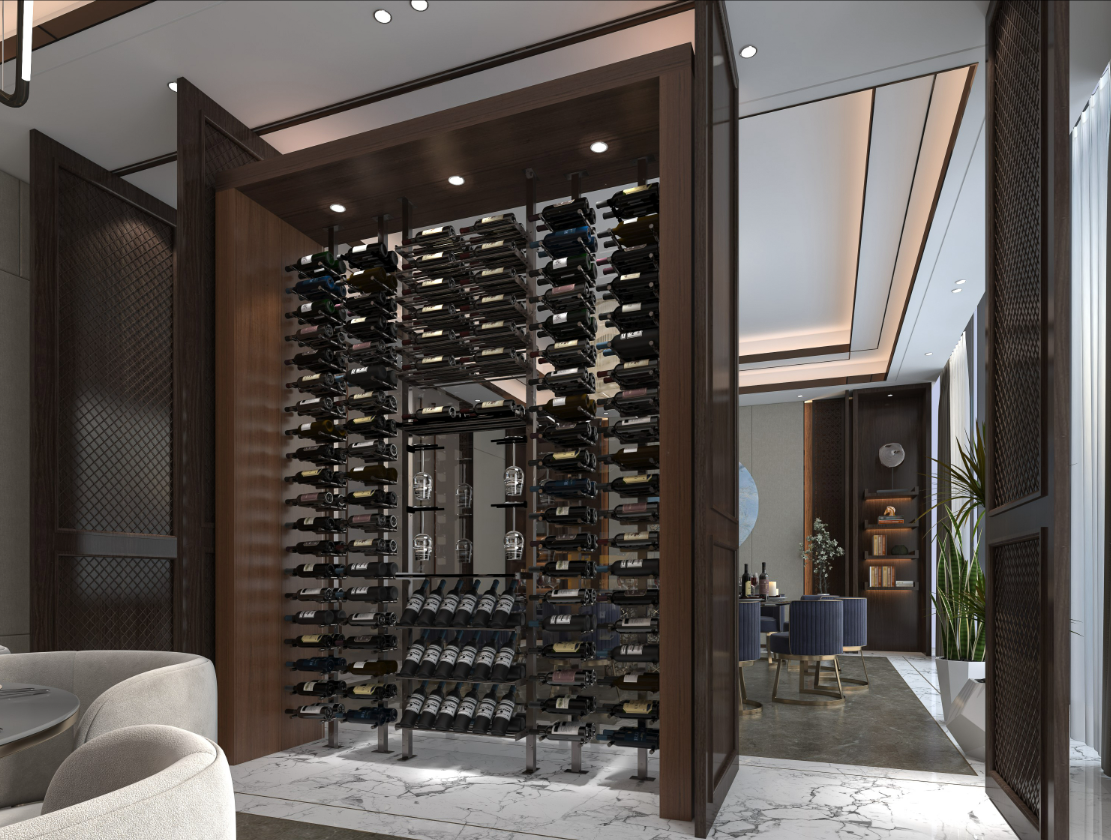
A built-in wine display integrates wine storage directly into the architecture of a living space. This could be a wine display wall or a built-in wine rack incorporated into cabinetry or a feature installation.
Instead of separating the collection, this approach makes it part of the room’s design.
Where it works best
- Kitchens, dining areas, or home bars
- Hallways or open-concept living spaces
- Entertaining zones or a small tasting room setup
What defines it
- Integration with cabinetry or a wall-mounted wine rack system
- Visual emphasis, often with a modern wine wall or label-forward layout
- Cooling solutions that fit within or around the display
Having a wine rack built in works well when the goal is accessibility and presentation. It keeps wine visible as well as easy to reach. For example, label-forward metal rack systems such as VintageView can create a sleek, convenient display.

Installation Requirements Are Very Different
The biggest differences between these two options show up during planning and installation.
Self-contained wine room requirements
- Insulated walls, ceilings, and doors
- Vapor barrier to protect against moisture transfer
- Dedicated cooling equipment sized to the room
- Consideration for glass, lighting, and overall heat load
A true wine cellar design must account for the full environment. Without proper construction, even a high-quality wine cellar cooling unit cannot maintain stable conditions.
Built-in wine display requirements
- Coordination with cabinetry, finishes, and layout
- Cooling systems that can be concealed or integrated into the design
- Placement that avoids heat sources and direct sunlight
- Thoughtful spacing for bottle access and visibility
A built-in wine cooler may be part of the solution, especially in smaller displays. In larger feature walls, specialized wine storage systems can be paired with hidden or low-profile cooling.
Compare Performance, Not Just Appearance
An attractive design is important, but performance determines how well the wine is preserved.
Self-contained wine room strengths
- More stable conditions for long-term storage
- Better suited to larger bottle counts
- Easier to scale as the wine collection grows
Built-in wine display strengths
- Strong visual impact within living spaces
- Immediate access for serving and entertaining
- Works well for curated or frequently rotated bottles
A wine wall can still perform well when designed correctly. The difference is that it requires tighter coordination between cooling, materials, and layout.
Design Impact and Daily Use
The intended use of the space often points to the right solution.
Home wine room experience
- Private, storage-focused environment
- Designed for capacity and organization
- Ideal for collectors who manage inventory over time
Built-in wine display experience
- Open, visible, and integrated into daily life
- Functions as both storage and design feature
- Enhances entertaining areas and shared spaces
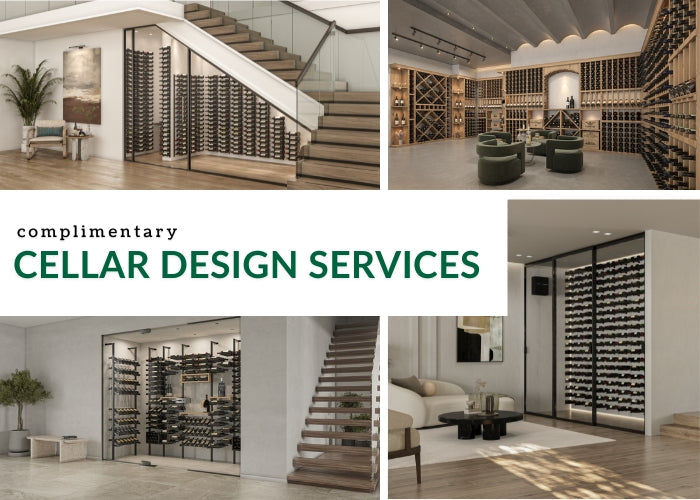
A floor-to-ceiling glass enclosure can blur the line between the two. It allows a wine cellar to remain visible while still maintaining separation from the main room.

Budget, Scope, and Flexibility
Both approaches vary in cost depending on materials, size, and complexity.
Self-contained wine room
- Higher construction scope in many cases
- Greater long-term value for serious collectors
- Easier to expand using modular wine storage solutions
Built-in wine display
- Efficient for smaller or design-driven projects
- Costs can increase with custom millwork or glass features
- Less flexibility once installed in a fixed location
A wine cellar vs. wine room comparison often comes down to scale. A dedicated room supports growth, while a built-in feature is usually designed around a defined footprint.

Making the Right Choice for Your Wine Storage Setup
The best fit depends on your space and your wine collection.
|
Home Wine Room |
Built-In Wine Display |
|
Best for long-term storage and aging |
Best for visible, design-driven storage |
|
Supports larger or growing wine collection |
Ideal for smaller, curated collections |
|
Requires an enclosed, insulated wine room |
Integrates into open living spaces |
|
Uses a dedicated wine cellar cooling system |
Often uses a built-in wine cooler or concealed cooling |
|
Separates wine from daily household conditions |
Keeps wine accessible for entertaining |
|
Easier to expand with modular wine storage systems |
Fixed layout once installed |
|
Focuses on preservation and capacity |
Focuses on presentation and accessibility |
Explore Your Wine Display Ideas With Wine Racks America
Backed by more than two decades of expertise, Wine Racks America delivers custom designs built around the specific needs of the space and the collection. In as little as 48 hours, you’ll receive a detailed custom layout that incorporates your specifications. It’s a streamlined way to move from concept to execution with confidence.