Passive vs. Active Wine Cellars: What's the Difference?

Designing a home wine cellar starts with one important question: should you build a passive wine cellar, or invest in an active system? The difference between passive and active wine cellars comes down to control—specifically how temperature and humidity are managed over time.
Both options can create beautiful spaces. But the way a cellar holds its environment will directly influence how your wine ages. Understanding the strengths and limits of each approach will help you choose the right solution for your collection, your climate, and your long-term goals.
What Wine Needs to Age Properly
Before comparing the types of wine cellars, it helps to understand what wine actually requires.
For long-term wine storage, most collectors aim for:
- A consistent temperature between 50–60°F, with 55°F often used as a target in temperature-controlled wine storage.
- Relative humidity between 50–70% to help protect cork integrity and preserve labels.
Stability matters more than chasing a perfect number. Repeated temperature swings can accelerate aging unevenly. Extremely dry air may shrink corks over time. Excess moisture can damage labels and create musty conditions.
Light and vibration also play a role, but temperature and humidity are the foundation of effective home wine storage.

What Is a Passive Wine Cellar?
A passive wine cellar relies on the natural conditions of the home to maintain suitable storage temperatures. There is no dedicated cooling unit. Instead, the room depends on its location and insulation. However, some passive cellars still use a standalone humidifier or dehumidifier to fine-tune conditions, even without a dedicated cooling system.
A passive cellar works best in spaces that stay naturally cool and relatively stable throughout the year, often below grade. Basements surrounded by earth can buffer seasonal temperature swings, making them good candidates for passive wine.
When a Passive Wine Cellar Works Well
A passive wine cellar may be a strong option if:
- The space is fully or mostly below ground level.
- Seasonal temperatures remain relatively moderate.
- The room is insulated and well sealed.
- The collection turns over regularly rather than aging for decades.
Because there is no mechanical system, a passive cellar is quiet and has lower operating costs. For homeowners building a small DIY wine cellar in a naturally cool basement, this approach can be practical.
Modular systems like InstaCellar™ make it easy to build a stable foundation now and expand later if your collection grows or you decide to add cooling.
Where Passive Cellars Struggle
A passive cellar becomes more difficult when:
- The room is above grade.
- Exterior walls absorb heat in summer.
- The space sits near a kitchen, laundry room, or garage.
- The local climate experiences wide seasonal swings.
In these cases, even a well-built passive wine cellar may drift outside ideal storage ranges during warmer months.
If you choose a passive cellar, proper construction is important. Insulation, air sealing, and a properly fitted door all support stability. A thoughtful racking layout also helps—keeping bottles organized and minimizing unnecessary handling.
What Is an Active Cellar?
An active cellar uses a dedicated cooling unit as part of a complete wine cellar climate control system. Instead of relying on ambient conditions, it mechanically maintains a set temperature inside the room.
If you are building a home wine cellar above grade or in a climate with hot summers, active cooling provides consistency that passive approaches cannot always deliver.
Wine Cellar Cooling Systems Explained
There are several types of wine cellar cooling systems available for residential wine cellar design:
- Through-wall (self-contained) units, which mount directly into the cellar wall.
- Ducted setups, which allow equipment to be located remotely for quieter operation.
- Split systems, which separate the evaporator and condenser for more installation flexibility.
Each option offers different placement and noise considerations. The right choice depends on room size and location, as well as your aesthetic goals.
At Wine Racks America, we sell a range of wine cellar cooling systems and can help you choose the right category for your project. While we do not install them, we guide homeowners in selecting equipment that matches room size and layout so airflow, rack placement, and clearance requirements work together.
Why Construction Matters Even More in an Active Cellar
An active cellar only performs properly when the room is built correctly. Insulation, vapor barriers, and a tightly sealed door prevent conditioned air from escaping and warm air from entering. Without these elements, cooling systems run inefficiently and struggle to maintain stability.
Cooling can also influence humidity. In drier homes, mechanical systems may reduce moisture levels, requiring monitoring to ensure the space remains within recommended ranges.
For homeowners seeking dependable, long-term temperature-controlled wine storage, an active cellar provides predictability that a passive cellar cannot guarantee in all climates.

Humidity: The Often Overlooked Factor
Humidity is where many homeowners misunderstand the difference between passive and active wine cellars.
A passive wine cellar does not automatically provide ideal humidity. Some basements run extremely damp, which can lead to mold or label damage. Others, particularly in dry regions, may fall below recommended humidity levels.
An active cellar does not automatically mean dry conditions either, but cooling systems can remove moisture from the air as part of their operation.
Monitoring is essential in either case. Signs of overly dry conditions may include curling labels or corks that feel less resilient over time. Excess humidity may present as musty odors or visible condensation.
Material selection plays a role as well. Wood wine racks in higher-humidity spaces benefit from protective finishes. Options such as WineSafe™ help protect racks while preserving a clean storage environment.
Build Details That Determine Success
Whether you choose passive or active, proper build-out is the backbone of effective residential wine cellar design.
Key elements include:
- Adequate insulation to slow temperature change
- Air sealing to prevent constant exchange with surrounding rooms
- A vapor barrier to manage moisture migration
- A properly sealed, insulated door
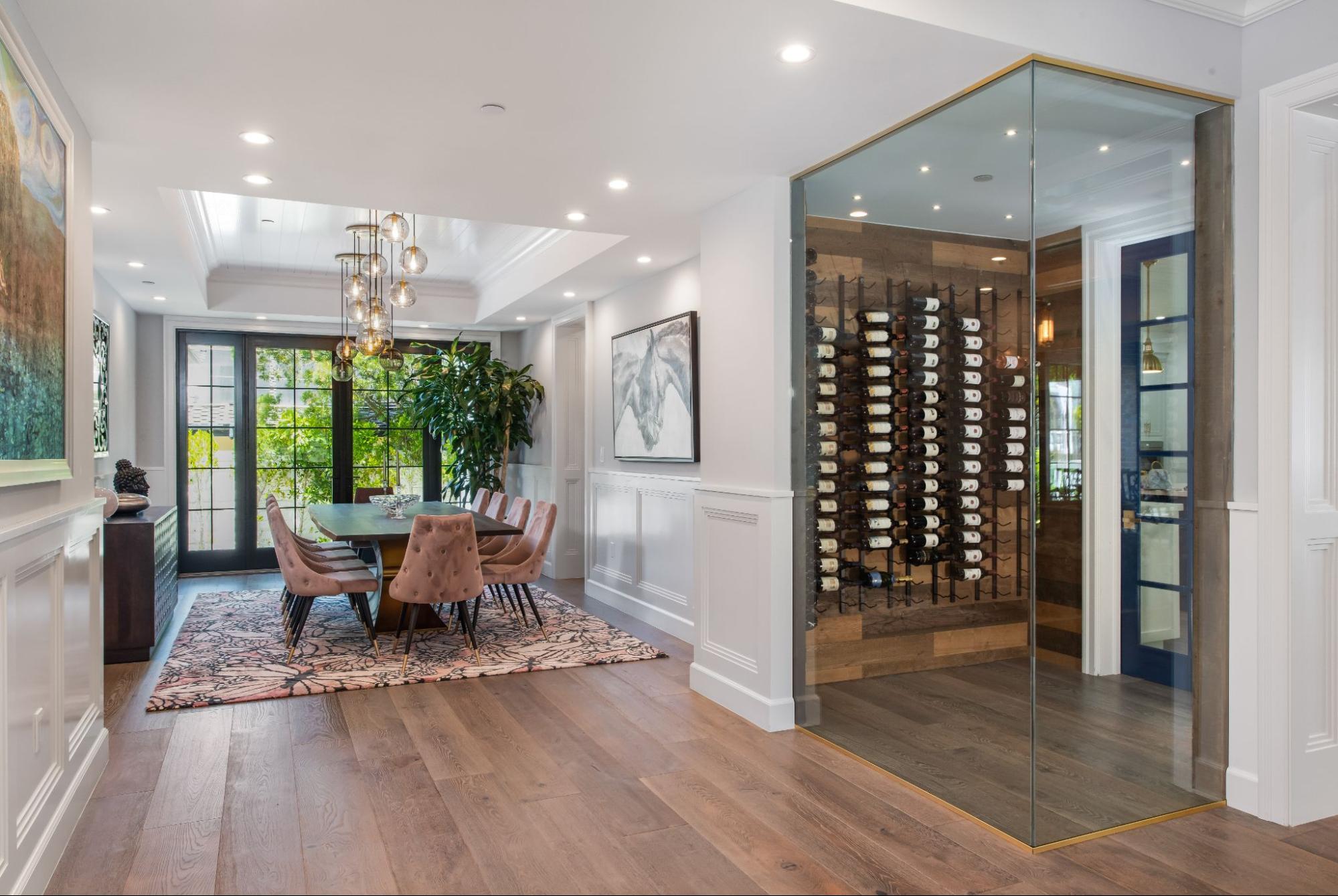
Glass can elevate the look of a wine cellar for the home, but larger glass enclosures increase thermal complexity. These designs often lean toward active systems to maintain reliable control. In active cellars with glass enclosures, a label-forward system like the VintageView® Wine Wall allows bottles to double as display while maintaining sensible clearances for your cellar’s airflow plan.
Planning storage during the build phase also improves results. Floor-to-ceiling racking reduces wasted wall space. Mixing label-forward displays with deeper storage sections allows both presentation and capacity. A well-designed layout transforms a room into a true home wine cellar, not just a closet with shelves.
Cost and Complexity: Passive vs. Active
From a budget perspective, passive cellars usually have lower equipment costs because there is no cooling system. Ongoing expenses are minimal beyond monitoring conditions.
Active cellars require a larger initial investment in equipment and construction. There are operating costs associated with electricity and routine maintenance, such as keeping airflow clear and checking drain lines.
The decision often comes down to the value of the collection and your aging timeline. If you are building a luxury home wine cellar intended to hold bottles for many years, mechanical climate control can protect that investment. If your collection rotates quickly and your space remains naturally cool, passive may be sufficient.
Many homeowners take a phased approach. They build the room properly with insulation and modular racks, monitor conditions, and add cooling later if needed. This flexibility works especially well with modular systems designed for expansion.

Building the Right Wine Cellar for Your Home
At Wine Racks America, we help homeowners design storage systems that match both the space and the storage strategy. From modular wood systems to metal display options, our wine racks support expansion as collections grow.
No matter what kind of storage system you’re considering, our team can help you plan a custom wine cellar design layout that protects your collection and beautifies the space. With the proper design and guidance, your wine cellar can perform as beautifully as it looks.