Label-Forward vs. Display-Top Racks: Which Fits Your Cellar?
Designing a wine cellar involves more than just figuring out how many bottles you can store. The style of wine cellar racks shapes how the space feels, how easily bottles are found, and how your collection is experienced over time.
Two of the most popular approaches—label-forward wine racks and display-top wine rack designs—offer very different advantages. Understanding how each works makes it easier to choose the right direction for your collection.

What Is a Label-Forward Wine Rack?
Label-forward wine racks are designed so the front label of each bottle faces outward. Instead of seeing corks or bottle ends, you see the identity of the wine itself. This creates a clean, elegant presentation that feels closer to a curated display than traditional storage.
In our GrandCellar™ collection, label-forward wine racks take this concept further with full-depth bottle placement and premium wood construction in White Oak, Walnut, and Sapele Mahogany. The result is a more substantial, built-in appearance that works beautifully.
Why homeowners and designers choose label-forward racks:
- Quick identification without pulling bottles out
- A strong, uniform wine wall display across entire sections
- A more contemporary, gallery-style aesthetic
- Ideal for collections where visibility matters as much as storage
For collectors who regularly access their bottles or want their wine bottle display to double as a design feature, this approach brings both clarity and presence.
What Is a Display-Top Wine Rack?
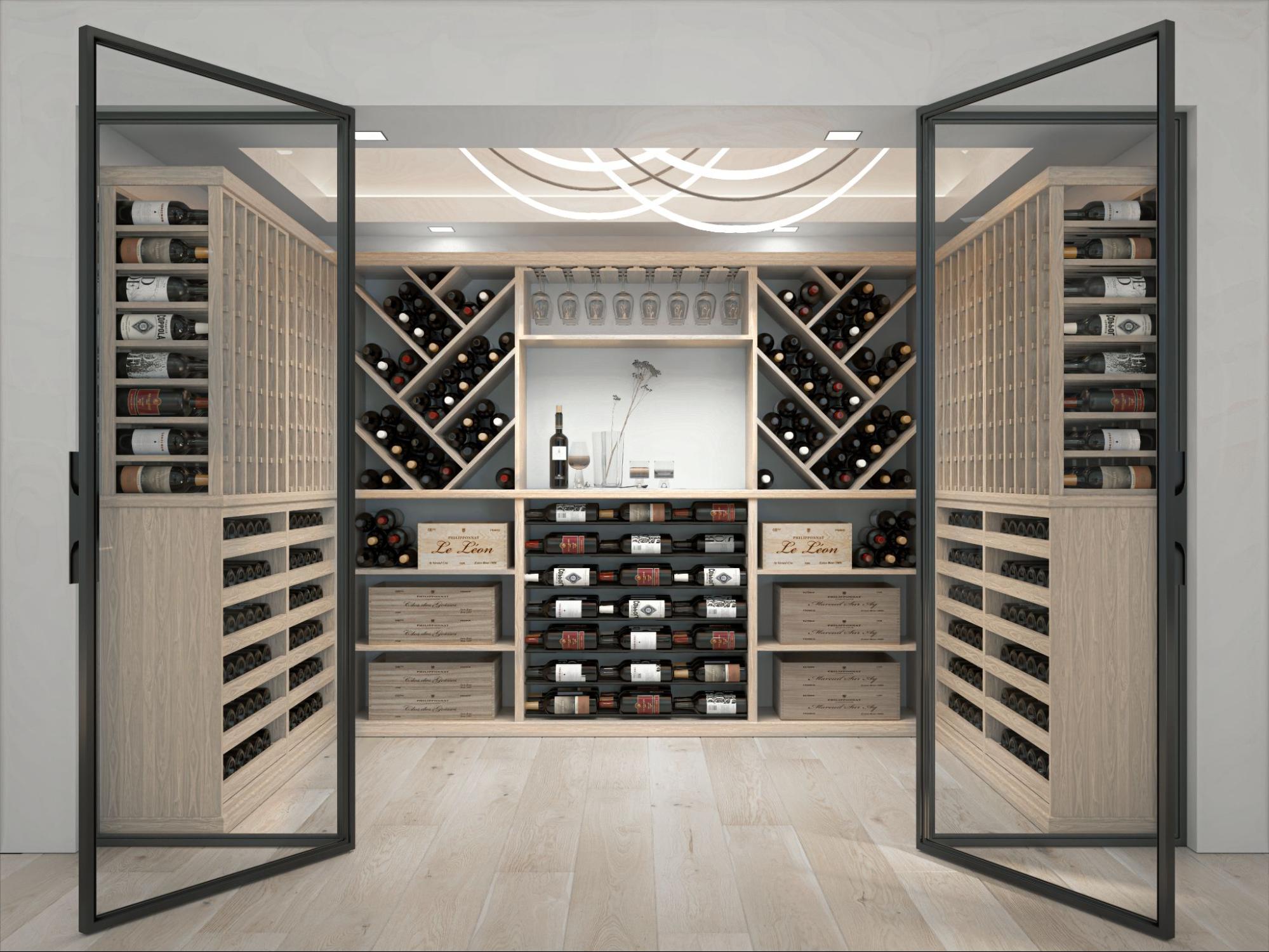
A display-top wine rack combines traditional horizontal storage with a featured top row designed for presentation. The lower sections hold bottles in a standard orientation, while the upper tier highlights select bottles at an angle or in a more visible position.
This creates a look that is part storage, part showcase.
Our display-top wine racks are built around modular InstaCellar™ systems, making them easy to configure and expand over time. They also accommodate multiple bottle sizes, including Split (2 ⅜″), Bordeaux (2 ⅞″), Cabernet (3 ⅛″), and Burgundy (3 ¼″). That makes these wine display racks a practical choice for mixed collections.
Why homeowners and designers choose display-top racks:
- A dedicated area for featured bottles
- Visual variety that breaks up long rack runs
- Strong compatibility with different bottle shapes
- A balance between everyday wine storage and display
This style works especially well in home wine cellar projects where you want a warm, approachable layout with a touch of presentation built in.

When Label-Forward Wine Racks Make the Most Sense
Label-forward wine racks are often the preferred choice when visibility and design impact take center stage.
They are especially well suited for:
- Collectors who want to quickly locate specific bottles
- Contemporary or transitional wine cellars with clean lines
- Glass-enclosed wine rooms where the display is always visible
- Projects where the wine wall display serves as a focal feature
In these settings, label-forward racks create a refined, consistent appearance that aligns with modern residential wine cellar design. The full-depth construction available in GrandCellar™ systems also adds visual weight that gives the installation a more sophisticated presence.
When a Display-Top Wine Rack Is the Better Fit
Display-top wine racks shine in layouts that benefit from variation and flexibility.
They work well for:
- Smaller or mid-sized home wine cellar projects
- Collections with varied bottle shapes and sizes
- Modular layouts that may expand over time
- Designs that blend storage with decorative presentation
Because the top row introduces a change in angle and visibility, these racks naturally create visual interest without requiring a full wall of label-forward storage. They also integrate easily with other wine racks, bins, and cubes, so they’re a versatile option for evolving collections.
How Layout Influences Your Decision
The shape and flow of your cellar often determine which rack style works best.
Long Wall Runs
Label-forward wine racks can bring order and clarity to extended walls, making large collections easier to navigate.
Feature Walls and End Sections
A display-top wine rack adds dimension and breaks up repetition, which can be useful at the end of a run or in a focal area.
Mixed Configurations
Many custom wine rack designs combine both approaches—using label-forward sections for visibility and display-top racks for contrast. This strategy often delivers the most balanced result.

Capacity, Access, and Daily Use
Your day-to-day interaction with the cellar should guide your decision just as much as aesthetics.
- If you frequently rotate bottles or enjoy browsing your collection, label-forward wine racks make access more intuitive. Every label is visible, which reduces handling and keeps organization simple.
- If your collection includes a range of bottle sizes or you prefer a more traditional storage rhythm, a display-top wine rack offers practical flexibility while still giving you a place to highlight standout bottles.
Both styles support reliable wine storage, but they serve different habits. One leans toward visibility and speed. The other balances storage density with selective display.
Design Style and Overall Aesthetic
The right choice also depends in part on the kind of visual impression you want the cellar to make.
For a More Contemporary Look
Label-forward wine racks deliver a sleek, structured appearance that aligns with modern designs and minimalist interiors.
For a Classic Feel
Display-top wine racks introduce variation and warmth, creating a more traditional layout with built-in display moments.
Matching the Rack to the Room
Finishes, lighting, and surrounding materials all influence how the racks read within the space. A glass wine wall display may benefit from full label-forward visibility, while a dedicated cellar room might feel more inviting with a mix of display-top elements.
Why Many Custom Wine Cellars Use Both
The most effective wine storage solutions often combine multiple rack styles.
By pairing label-forward wine racks with display-top wine racks, you can:
- Keep high-visibility bottles front and center
- Create focal points without overwhelming the space
- Maintain efficient storage while adding visual depth
- Adapt the layout as your collection grows
This hybrid approach is common in custom wine cellars because it balances organization with design impact. It allows the cellar to function well while still feeling curated and personal.

The GrandMillesime Wine Liquor Combo
Product Link: https://moderncellars.com/products/the-grandmillesime-wine-liquor-combo
Bringing Your Cellar Together
Choosing between a label-forward wine rack and a display-top wine rack comes down to how you want the collection to be seen and used. One emphasizes full visibility and structure. The other introduces variation and highlighted moments.
Remember that in many cases, the best solution is not choosing one over the other, but combining both in a way that fits your space.
If you are planning a home wine cellar or refining an existing layout, explore our GrandCellar™ label-forward wine racks for a more presentation-oriented wall, or our display-top wine racks for modular storage with built-in presentation. Our team can help you bring these elements together into a unified design that reflects your collection and your space.