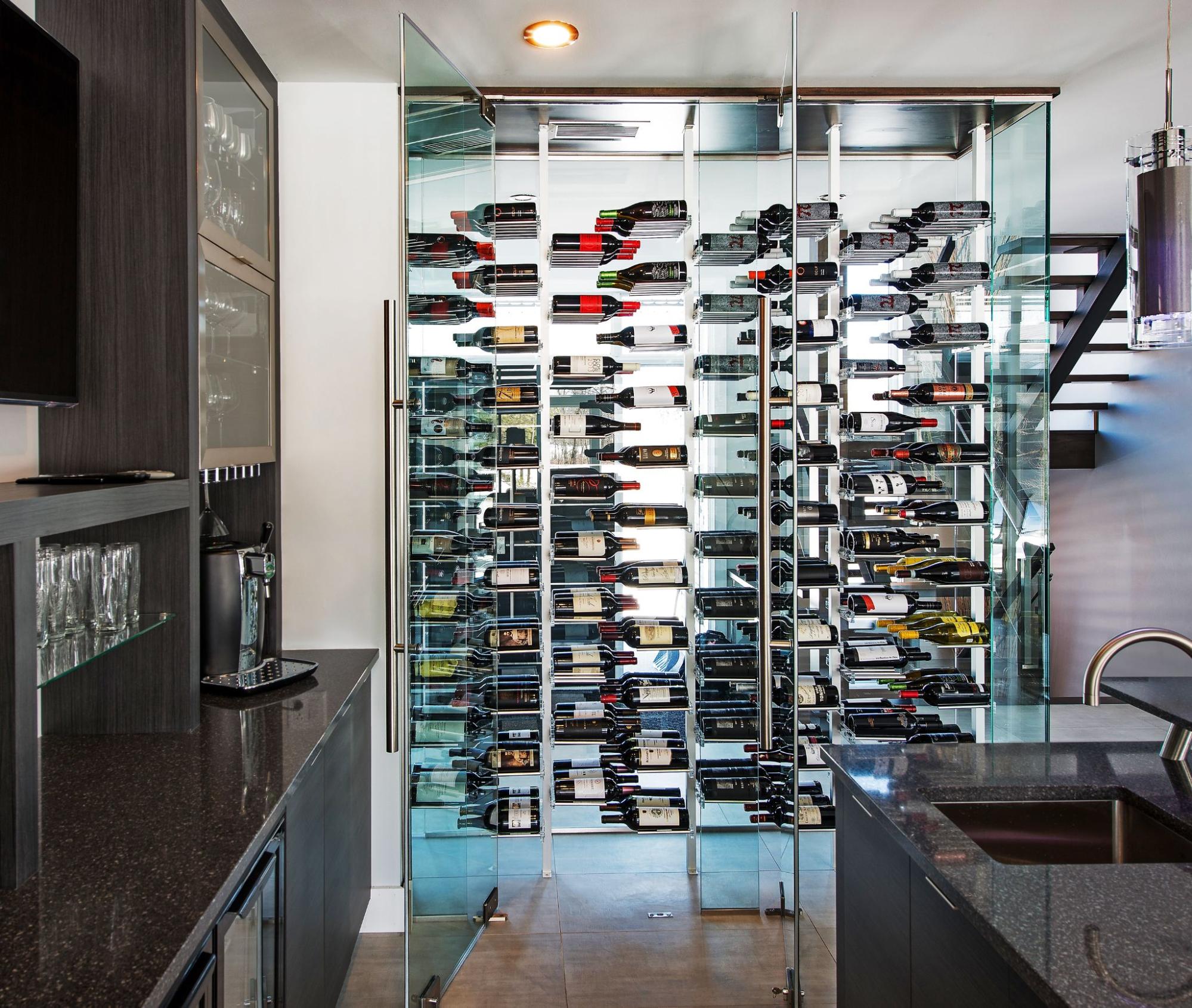
The Floating Bottle Effect: How to Achieve a Sleek Display
A floating wine display makes bottles look as though they are suspended against the wall, supported by minimal structure and clean spacing. Instead of using bulky cabinetry or traditional cubbies, this approach turns the bottle itself into the main visual feature.
The look works especially well for homeowners planning a modern wine wall, designers creating a refined focal point, and architects looking for a space-efficient way to integrate wine storage into a room. The effect can feel dramatic, but the planning should stay simple. Choose a floating wine rack system that mounts securely and gives each bottle room to stand out.

What Creates the Floating Bottle Effect?
The floating bottle effect is a design result, not one specific rack type. Wall-mounted metal racks, peg-style supports, floor-to-ceiling frames, wood-and-metal display systems, and stainless-steel cable systems can all create the look.
A clean floating display usually depends on:
- Low-profile hardware
- Label-forward or angled bottle placement
- Consistent spacing
- Open space around the bottles
- A simple surrounding wall finish
- Clear vertical or horizontal alignment
The support structure does not need to disappear completely. It simply needs to stay quiet enough that the bottles become the focus.
Find the Right Placement
Before choosing a floating wine rack, decide where the display should live. Because floating bottle displays use minimal structure, they can adapt to many spaces, from compact home bars to larger contemporary wine wall systems. Still, not every available wall is the right fit. These designs work best on walls with enough open space around them, where the display can feel clean rather than crowded.
In the home, strong placement options include:
- Dining rooms
- Home bars
- Kitchen-adjacent spaces
- Wide hallways
In commercial settings, floating wine bottle holders can work well in high-visibility areas, such as:
- Behind a bar
- Near a host area
- Along a visible dining-room wall
- Inside a tasting room
Plan for easy bottle removal and enough clearance around the display. Since many floating wine displays sit in visible living spaces, choose a wall away from direct sunlight and nearby heat sources. Avoid strong HVAC airflow when possible.

Choose the Right Mounting Method
Different rack systems create different versions of the floating look.
Wall-mounted wine racks are often the most direct option. Bottles project from the wall while the rack structure stays compact. This works well for accent walls and smaller collections.
Cable wine racks use steel cables to create a suspended look, allowing the bottles to appear visually lighter than they would in a traditional wine display rack. They can feel very open in contemporary spaces where the designer wants the hardware to recede.
Peg or pin systems use discreet supports that hold bottles in repeated rows. They are a strong fit for clean, gallery-like layouts.
Floor-to-ceiling wine racks work well for taller displays, room dividers, and larger walls. They can create an architectural look while keeping the bottle supports visually minimal.
The best method depends on the wall itself and the number of bottles the floating wine rack system needs to hold. Use manufacturer-approved hardware, and bring in professional support when the project requires structural planning.
Use Layout to Control the Look
A floating wine bottle display can feel sleek or cluttered depending on the layout. Repetition makes the effect work. A planned grid, column, or vertical pattern feels more refined than bottles placed randomly across a wall.
Before finalizing the layout of your floating wine wall, consider:
- How many bottles should be visible
- How labels will face the room
- How the display lines up with counters, cabinetry, or trim
- How much open space each bottle needs
- How the wall will look when the rack is only partly full
Single-depth layouts often feel lighter and more minimal. Double- or triple-depth layouts add storage capacity and visual depth. For a small space, single-depth storage may create the cleanest floating effect. For a larger wine wall, deeper configurations can make the display feel more substantial without relying on heavy cabinetry.
A soft wall wash or nearby accent light can define the bottle shape and label view without making the display look overly busy.

Consider the Millesime Floating Bottle Collection
The Millesime Floating Bottle Collection is a strong example of how to achieve this look. Its wood-and-metal format works well for compact spaces and larger contemporary wine display walls because it offers modular sizing and different bottle-depth options.
Material choice also changes the mood of the display. White Oak gives the wall a lighter, contemporary feel. Walnut adds warmth and depth. Sapele Mahogany creates a richer look while still supporting a clean layout. These wood options make the collection suitable for private homes as well as hospitality spaces.
With the right configuration, a Millesime Floating Bottle rack turns a simple wall into a sleek, label-forward wine display that feels refined without taking over the room.