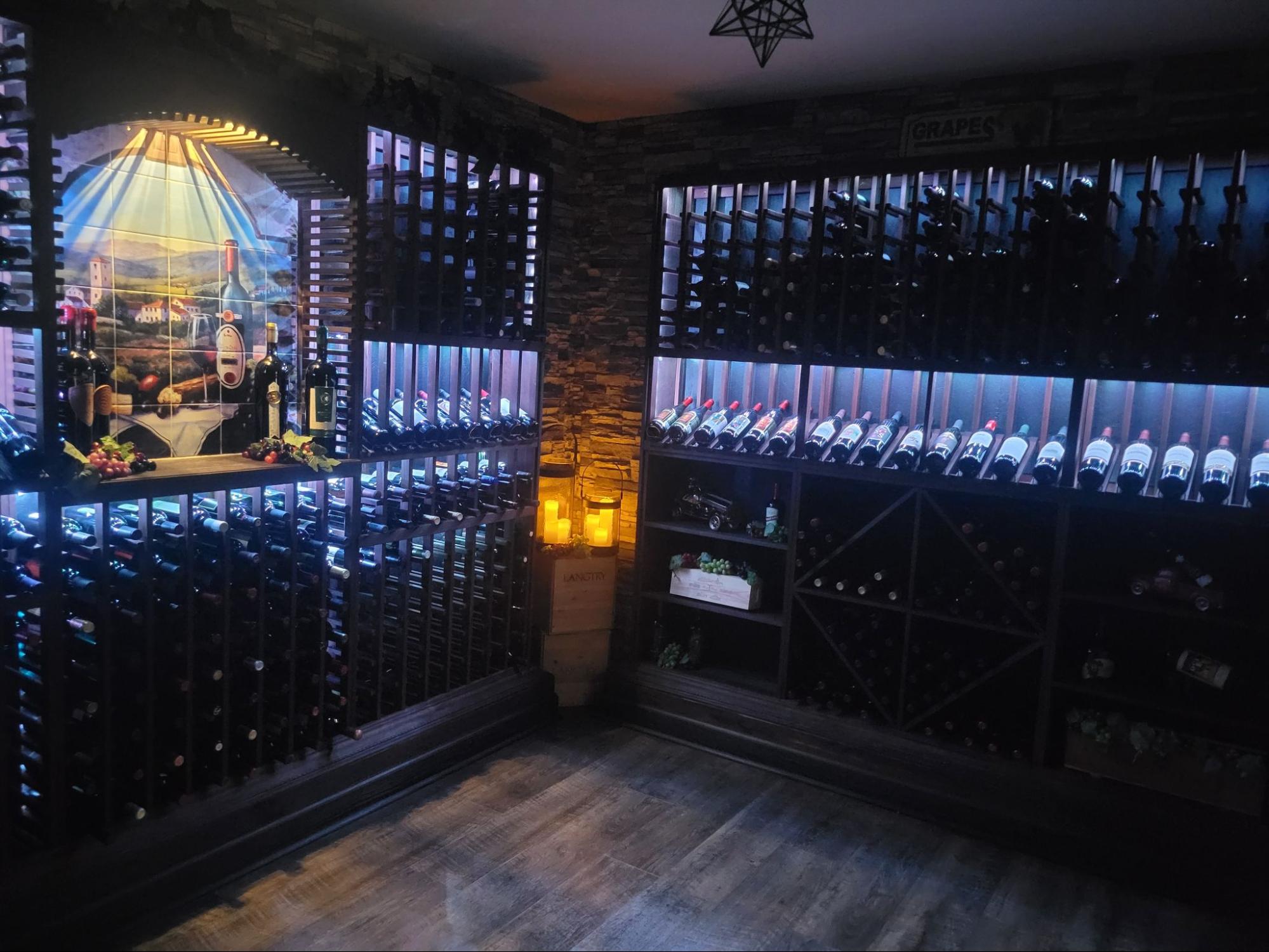
Best Wine Cellar Flooring for Stability and Style
A well-designed wine cellar depends on more than racking and cooling equipment. The floor beneath the collection plays a major role in long-term performance, from supporting loaded wine racks to handling controlled humidity and tying the room’s design together. Ideally, cellar flooring should provide structural stability, moisture resistance, and a finish that complements the overall space.

What Makes Wine Cellar Flooring Different?
Unlike a standard living space, a wine cellar is designed around stable storage conditions. Most wine cellars are maintained within a controlled humidity range and a relatively narrow temperature window to help protect the collection over time. That means the wine cellar floor becomes part of the larger environmental system.
Thermal mass, insulation, and moisture control all influence cellar stability. Underground and earth-sheltered cellars, for example, reduce temperature swings more effectively because surrounding materials help buffer external conditions. The floor assembly can play a role in that stability, especially in basement wine cellars and lower-level wine rooms.
The flooring also has to support significant weight. A growing wine collection can quickly add hundreds or even thousands of pounds once bottles, wood racks, metal displays, cabinetry, and tasting furniture are included. That is why hard, level flooring for cellars is strongly preferred over soft or uneven surfaces.

Begin With Stability and Structural Support
The best wine cellar flooring begins with a solid foundation. Before selecting finishes, builders and homeowners should confirm that the subfloor is level, structurally sound, and appropriate for the intended rack layout.
A stable cellar floor helps:
- Keep freestanding racks level
- Support cleaner alignment around wall-mounted systems
- Reduce movement over time
- Support heavy bottle loads safely
- Improve installation accuracy for custom layouts
Floor planning should also happen before final rack dimensions are approved. Changes in flooring thickness can affect trim alignment, glass enclosure clearances, toe-kick heights, and door swings.
In larger wine cellar ideas featuring floor-to-ceiling displays or under-the-stairs storage, concentrated rack loads may require additional planning around framing or slab support. This is especially important in contemporary wine room design projects using metal racks and floating displays.
Moisture Resistance in a Wine Cellar
Wine cellar flooring should perform well in a humidity-controlled environment. Materials that trap moisture can create odor and maintenance problems inside a wine cellar.
Many wine cellars are built over concrete slabs or basement subfloors. Concrete itself is durable, but it should not automatically be treated as a finished wine cellar floor without proper sealing and vapor control planning. Vapor barriers and proper insulation throughout the cellar envelope help limit moisture intrusion and reduce strain on the cooling system.
When selecting wine cellar materials, it is important to think beyond the visible finish. Adhesives, grout, sealers, and transitions should also be suitable for a climate-controlled room.

The Best Wine Cellar Flooring Options
There is no single perfect flooring material for every cellar. The right flooring choice should reflect the cellar’s design direction and storage layout.
Porcelain or Ceramic Tile
Porcelain and ceramic tile remain among the most reliable and versatile cellar flooring options.
These materials handle moisture well and offer a durable surface that is easy to maintain. Large-format porcelain can mimic natural stone or wood while maintaining better moisture performance than many organic materials.
Tile works especially well in:
- Contemporary wine rooms
- Basement wine cellars
- Glass-enclosed displays
- Transitional wine cellar design projects
Because tile creates a hard, stable surface, it also pairs well with modular wood racks and wall-mounted metal wine displays.
Natural Stone
Natural stone delivers a timeless appearance that fits beautifully in traditional wine cellar ideas and refined residential projects.
Slate, limestone, travertine, and textured stone finishes often pair naturally with wood wine racks, arched entries, heavy millwork, and warmer lighting palettes. Stone also offers excellent durability when properly sealed.
Designers should still consider:
- Slip resistance
- Surface texture
- Sealing requirements
- Grout maintenance
A heavily polished stone floor may look elegant, but it can become slippery if spills or condensation are present.
Sealed or Polished Concrete
Sealed concrete has become increasingly popular in modern wine room flooring applications.
Polished concrete is commonly used in basement-style aging spaces because it is durable and compatible with moisture-aware construction.
Concrete works particularly well with:
- Matte Black metal racks
- Gunmetal finishes
- Glass wine enclosures
- Minimalist wine wall systems
- Industrial-inspired wine cellar design
It also provides a stable base for larger collections and freestanding storage systems.
Engineered Wood
Engineered wood can add warmth and visual continuity in residential wine cellar flooring, especially when coordinating with wood racking systems.
However, engineered wood should be selected carefully. Not all products are suitable for cellar environments. Builders should confirm:
- Moisture compatibility
- Manufacturer humidity tolerances
- Proper vapor barrier installation
- Suitable underlayment systems
Solid hardwood generally requires more caution because humidity fluctuations can lead to movement or warping over time.
Luxury Vinyl Tile or Plank
Luxury vinyl products are increasingly used in wine room design because they offer moisture resistance and a wide variety of finishes.
High-quality products can mimic stone or wood while providing easier maintenance in some residential applications. Product quality and installation methods matter significantly, however, especially in climate-controlled rooms.
The Wine Racks America team notes that many homeowners continue to gravitate toward natural wood and stone flooring when designing custom wine cellars. These materials pair well with both traditional and contemporary wine storage systems and contribute to a warm, enduring design aesthetic.

Flooring Materials to Avoid or Use With Caution
Some materials simply do not perform well in a wine cellar environment.
Carpet
Carpet is generally a poor choice for wine cellar flooring. It can trap moisture, absorb odors, hold dust, and become difficult to clean after spills. Humidity-controlled rooms may also increase the risk of mold development within carpet fibers or padding.
Unsealed Concrete
Raw concrete can create dusting problems and allow moisture transmission if left untreated. Proper sealing is important for long-term cellar performance.
Softwoods
Softwood flooring generally requires more caution in wine cellar applications because it is more vulnerable to movement and surface wear. Aromatic woods should also be approached carefully in enclosed cellar environments.
Radiant Heated Floors
Radiant heating systems are usually not recommended in wine cellars because they introduce additional heat into a room designed around cooling stability.
Match the Flooring to the Overall Cellar Style
The best wine cellar flooring should support the overall visual direction of the room without competing with the bottle displays themselves.
A few common pairings include:
- White Oak racks with textured stone or warm porcelain tile
- Walnut wine racks with darker slate or earth-tone flooring
- Matte Black metal racks with polished concrete or oversized tile
- Silver metal finishes with lighter contemporary flooring palettes
- Glass wine walls with sleek, low-profile flooring finishes
In many cases, simpler flooring allows the wine storage systems to remain the focal point.

Plan Your Wine Cellar From the Floor Up
Wine Racks America helps homeowners, designers, and builders create custom wine cellars that balance performance with presentation. Our team can help you plan a layout that supports the wine collection from the floor up. Explore our custom design services and start building a wine cellar designed for long-term stability and style.