Designing the Perfect Home Wine Bar
A well-planned home wine bar creates a welcoming place to serve wine and spend time with guests. It may transform an unused alcove or form part of a larger entertaining area, but the focus remains on accessible storage and convenient service.
Its layout should support comfortable movement and connect naturally with the adjoining room, while a climate-controlled cellar places greater emphasis on environmental control. Reaching that goal begins with defining the purpose of your bar.

Decide How You’ll Use the Bar
Before selecting wine racks or cabinet finishes, define the bar’s main purpose. A space used for an occasional evening glass requires a different layout from one designed for tastings or frequent gatherings.
Consider a few practical questions:
- How many bottles should remain readily accessible?
- Will the bar include spirits, mixers, or zero-proof beverages?
- How many glasses are typically needed?
- Does the collection include Champagne bottles or magnums?
- Will guests sit at the bar or use nearby seating?
This is also the point to choose between a dry bar, which has no sink, and a wet bar, which includes one. A dry bar is simpler to build and works well near a kitchen. A wet bar makes rinsing glasses and cleaning the counter easier, but it requires plumbing and usually increases the project cost.
Fit the Bar Into the Entertaining Area
Place the bar near the areas where people gather. A dining room supports food-and-wine service, while a living room or lounge creates a relaxed setting for conversation. Kitchen-adjacent walls are convenient for cleanup and food preparation. Finished basements can provide more room for seating and storage.
An unused wall, alcove, or existing cabinet run can support a compact built-in wine bar without a complete room renovation. Small home bars often work best when they make use of an overlooked area instead of competing with the room’s main purpose. For example, The Tower uses a 36-inch-wide, 93-inch-high vertical layout with dedicated areas for bottles and stemware. It offers a practical model for a narrow stretch of wall.
Plan the layout around movement between the major work zones. Bottles, glassware, refrigeration, and the serving counter should be close enough to use comfortably. Before approving the layout, confirm that it provides:
- Electrical access for refrigeration and lighting
- Clearance for cabinet and refrigerator doors
- Enough room to remove bottles from the racks
- A clear path between the bar and nearby seating
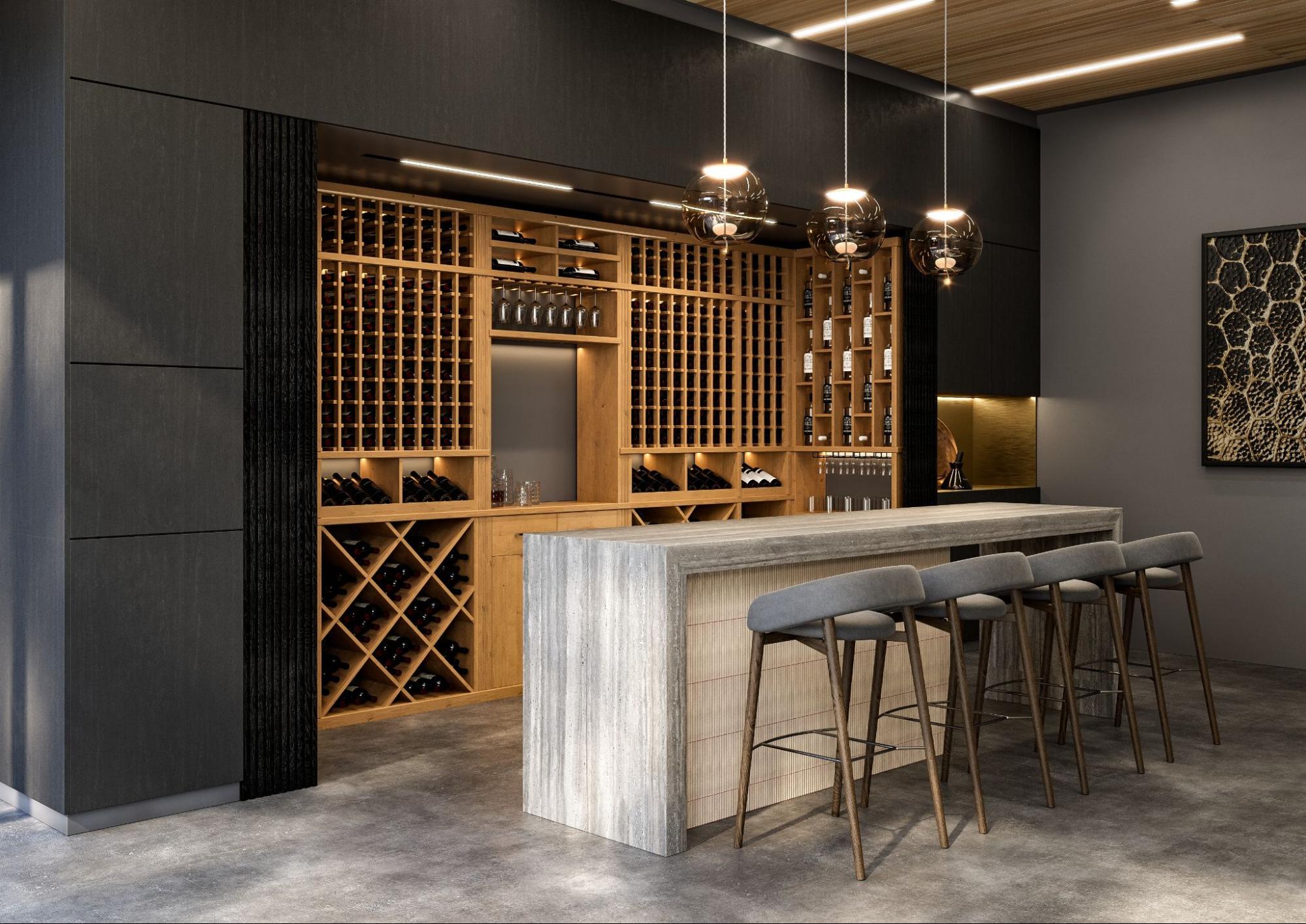
Stools can make the bar a gathering point, but they should not block drawers or appliance doors. In a narrow room, nearby dining chairs or lounge seating may work better than seats placed directly at the counter.

Organize Storage by Purpose
A strong wine bar design uses different storage types for different needs. Label-forward or high-reveal wine racks can feature favorite bottles and make labels easier to browse. Cork-forward racks generally provide more capacity within a given wall area, while wine cubes and bins offer efficient storage for everyday bottles.
A solid-top bin can provide bottle storage and a surface for pouring. For an existing wine bar cabinet, a countertop rack can add dedicated storage without requiring a complete renovation.
Other useful zones may include:
- Wider shelves for spirits and unusually shaped bottles
- Closed cabinets for backup glassware
- Drawers for openers, stoppers, and preservation tools
- Refrigerated storage for chilled serving bottles
Check the collection’s bottle formats before choosing a configuration. Champagne bottles and magnums may not fit openings designed for standard bottles. Modular components make it possible to combine the required storage types within one coordinated installation.
Build a Practical Serving Zone
The counter is the working center of the bar. Preserve enough open space to uncork a bottle, set down a decanter, and arrange several glasses side by side. Too many decorative objects can leave the bar with little room for the activities it was designed to support.
Place frequently used tools in a shallow drawer near the counter. Keep corkscrews and preservation tools within easy reach without leaving them permanently on display. Deeper cabinets can hold backup glasses or less frequently used serving pieces.
Keep everyday glassware clean, dry, and separated from strong-smelling foods or cleaning products. A purpose-built stemware rack can save shelf space, while a closed cabinet helps protect glasses from dust.
An undercounter wine refrigerator keeps chilled bottles close without taking up workspace. Choose a model approved for built-in installation and follow its ventilation-clearance requirements. A dual-zone model may be convenient for households that frequently serve different wine styles at different temperatures, but it is not necessary for every home bar.

Balance Display With Concealed Storage
A refined bar does not need every bottle or accessory in view. Display a limited group of wines, glassware, or serving pieces, then use closed storage for backups and visually distracting supplies. This balance makes the bar easier to use while preventing the open shelves from appearing crowded.
The wood should complement the adjoining room:
- Ponderosa Pine provides a light base that works with several stain colors.
- Knotty Alder introduces visible knots and natural variation.
- White Oak creates a lighter look that suits modern wine bars.
- Walnut adds warmth and depth.
- Sapele Mahogany provides a richer appearance for traditional or transitional interiors.
Available wood species vary by product line and configuration.
Your home bar design does not need to match every surrounding surface exactly. Repeating the room’s hardware finish or dominant wood tone may be enough to establish a visual connection. A distinctive backsplash or wine wall can then give the bar its own identity within the larger room.
Use Lighting and Seating to Shape the Experience
Lighting should support serving as well as atmosphere. Low-heat LED task lighting above the counter makes labels easier to read and provides clear illumination for pouring. Discreet accent lighting can highlight selected bottles or glassware without overwhelming the display.
Pendants or wall sconces can connect the bar to nearby seating and provide softer light for conversation. Keep stools and lounge furniture outside the working path between storage, refrigeration, and the counter.
Separate Display Wine From Long-Term Storage
An open home wine bar is designed for access and serving, not controlled aging. Keep only near-term drinking selections at the bar, ideally in a reasonably cool and stable location away from direct light and heat sources.
Place wines reserved for extended aging in a suitable wine refrigerator or a properly constructed climate-controlled cellar. A cooling unit cannot maintain cellar conditions in an open living area. It must serve an insulated, tightly sealed enclosure.

Bring the Home Bar Design Together
The best home wine bar supports the owner’s usual serving routine while making good use of the available space. It should provide a comfortable work surface with organized storage close at hand. Finishes that complement the surrounding room can turn an unused area into an inviting place for wine and conversation.
Explore our Bar & Beverage Collection and modular bar storage to find cabinets, bins, display racks, and storage kits for your planned layout.