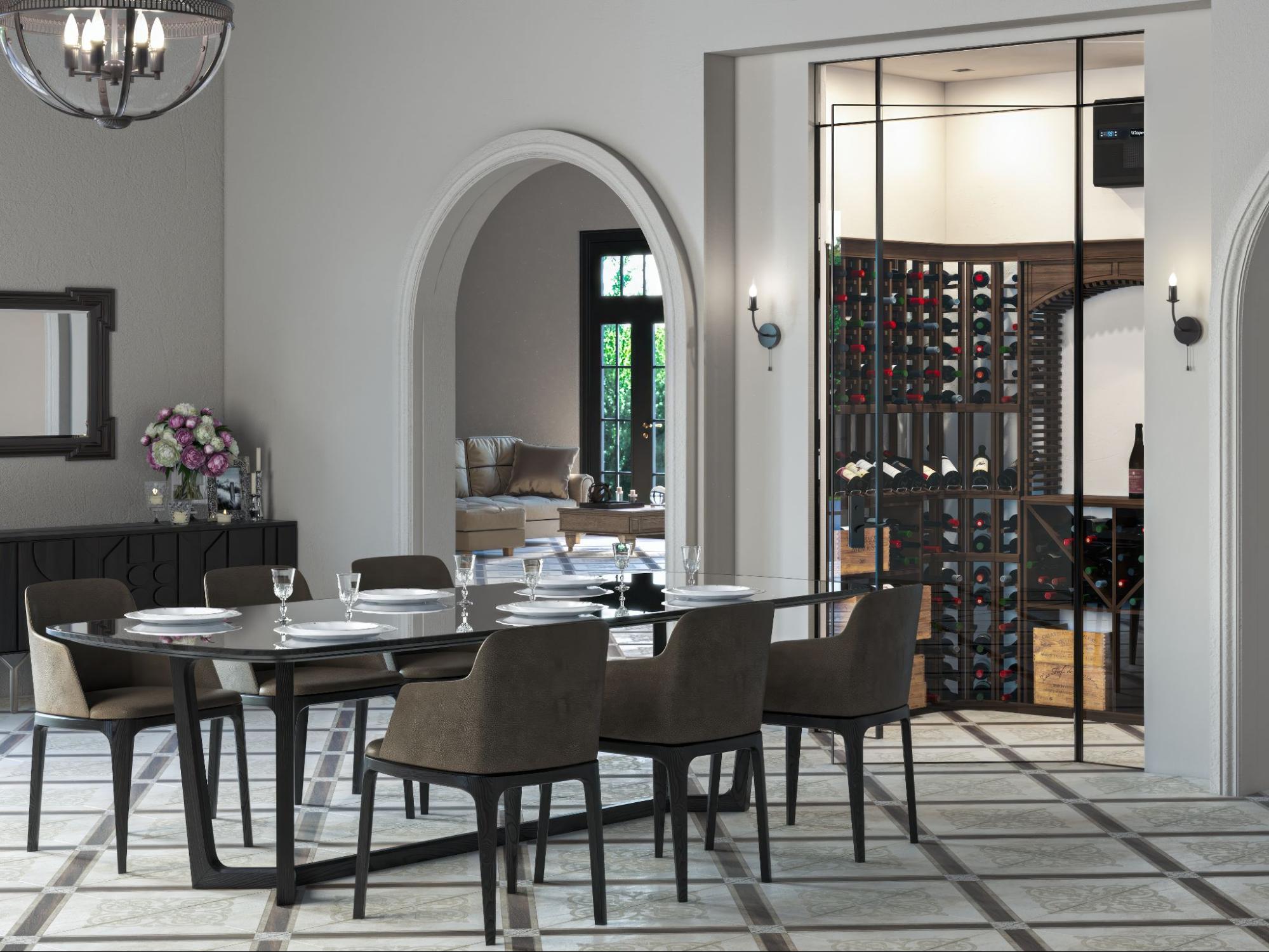
Adding Cooling to an Existing Wine Cellar: What to Know
Proper temperature and humidity control are vital to ensure your wine ages properly. Unless you have a traditional basement with very stable temperature and humidity conditions throughout the year, odds are you’ll need a climate control system for your wine storage space.
Maybe your collection has grown over the years or you’ve started keeping bottles longer. Or perhaps you’ve discovered the temperature fluctuates in the space more than you expected.
No matter where your wine storage area is located or its configuration, it’s possible to outfit the space with a wine cellar cooling unit without having to start over. There are wine storage units for every size and space. Ahead, we’ll explore the available wine cellar cooling options and offer some guidance on choosing the best system for your space.

Why Your Wine Cellar Needs Cooling
Wine should be stored at around 55°F with relative humidity between 50% and 70%. If your space doesn’t meet these requirements, your wine could be at risk. A properly outfitted, climate controlled space can help you avoid:
- Heat spikes: High temperatures can accelerate the aging process and affect the wine’s flavor and aroma.
- Temperature fluctuations: Repeated warming and cooling can cause the wine and air inside the bottle to expand and contract, which may compromise the seal.
- Lightstrike: Prolonged exposure to UV and other forms of light can trigger chemical reactions that alter a wine’s aroma and flavor.
- Oxidation: Too much oxygen exposure from cork shrinkage can prematurely age wine and change its flavor, color, and aroma.
Unless you have a true basement cellar, you’ll need a proper cooling system for long-term wine storage.
Determine the Cooling Needs of Your Existing Space
Evaluate your existing wine cellar before choosing a cooling system. Multiple factors will dictate the size and type of system you need, including the size of the room, how well it’s insulated, and the number of windows in the space.
Do the following when assessing the space:
- Check the insulation and vapor barrier: Wine cellars need insulated, sealed walls and ceilings to maintain consistent conditions. If your cellar is already finished, check construction records or consult a contractor to confirm what is behind the walls.
- Measure the room: Calculate the cellar’s cubic footage and account for glass walls, windows, and other features that increase the cooling load. Cooling units are typically rated for a maximum cubic footage based on their BTU capacity, so compare the unit’s rating with the size of your cellar to determine the right BTU capacity.
- Inspect the door and seals: Check the door for gaps, worn weatherstripping, or other air leaks. A poorly sealed door allows cool air to escape and forces the cooling system to work harder.
This information will help guide you in selecting the best type of wine cellar temperature control system for your space.

Types of Wine Cellar Refrigeration Units
Once you’ve assessed the space, consider where you can place the equipment and exhaust heat. The location and layout of your cellar or wine room will help narrow down these four options:
Through-Wall Wine Cellar Cooling Units
A through-wall cooling unit is a self-contained system that installs through the cellar wall. It circulates cool air inside and exhausts heat into an adjacent space. Through-wall units are a straightforward, cost-effective option that requires less space than a split system. You’ll need a power source, condensate drainage, and enough space behind the unit to dissipate heat.
Split System Cooling Units
A split system separates the evaporator inside the cellar from the condenser unit, which releases heat. This configuration works well for larger cellars and keeps compressor noise outside the wine room. Install the evaporator on a wall or ceiling based on your layout. Ceiling-mount cooling units also keep equipment away from your wine racks.
Ducted Cooling Systems
Choose a ducted cooling system to keep equipment, noise, and vibration outside the cellar. The unit sits in an adjacent space and circulates conditioned air through insulated ductwork. Ducted systems provide quiet performance without the refrigerated line sets of split systems.
Extreme Temperature Cooling Systems
Consider an extreme temperature system for a cellar in a garage, outbuilding, or other space exposed to very hot or cold conditions, or if you live in a desert state that experiences extreme heat. These systems use heavy-duty components designed for demanding ambient temperatures. They’re well suited to extreme climates and spaces without surrounding climate control.

Outfit Your Wine Cellar With Wine Racks America
Wine Racks America has everything you need to outfit and upgrade your wine cellar. Get expert help with cooling systems, wood and metal wine racks, doors, lighting, and custom wine cellar design. Our experienced team can help you choose the right products and help you create a beautiful, functional wine storage space.
FAQs
Can you add a cooling unit to a wine cellar that’s already finished?
Yes, no matter where your wine storage space is located or how large it is, there is a cooling system designed to meet its needs. The best choice depends on the specific conditions of the room.
Through-wall units work well for straightforward retrofits, split systems are suited to larger cellars, ducted systems keep equipment and noise outside the cellar, and extreme temperature systems work well in spaces exposed to very hot or cold conditions.
What size cooling unit do I need for my wine cellar?
Calculate your cellar’s cubic footage first. Then account for insulation, glass, ambient temperature, and door seals, which all impact the cooling load. Use these factors to choose a unit with the manufacturer-recommended cooling capacity for your space rather than relying on room size alone.
For example, a 500-cubic-foot cellar with solid, insulated walls may need less cooling capacity than the same size cellar with a large glass door. You generally shouldn’t try to calculate the additional BTUs yourself unless the manufacturer provides a formula. Instead, enter these details into the manufacturer’s sizing calculator or provide them to a wine cellar cooling specialist who can determine the appropriate capacity.
How much does it cost to add cooling to an existing wine cellar?
The cost of adding a wine cellar cooling unit depends on the type and number of units you need, along with any construction upgrades. A through-wall unit may require minimal labor, while a ducted system typically requires professional installation.
Costs can increase if you need to open walls to add insulation and a wine cellar vapor barrier or make electrical, drainage, or ductwork upgrades. If your cellar is already properly sealed and insulated, installation may be relatively straightforward. Contact Wine Racks America for help choosing the right cooling unit for your space and budget.
Do I need to insulate my wine cellar before installing a cooling unit?
Yes, a cooled wine cellar should have proper insulation and a vapor barrier to help maintain wine storage temperature and control moisture transfer. Address insulation gaps and air leaks before installing the cooling system. Review our wine cellar construction guide for recommendations on insulation, vapor barriers, doors, and other construction details.
What is the ideal temperature and humidity for a wine cellar?
Aim for a wine cellar temperature of around 55°F and relative humidity between 50% and 70%. Minor fluctuations are not usually cause for concern, but frequent temperature changes and humidity swings will damage your wine over time.