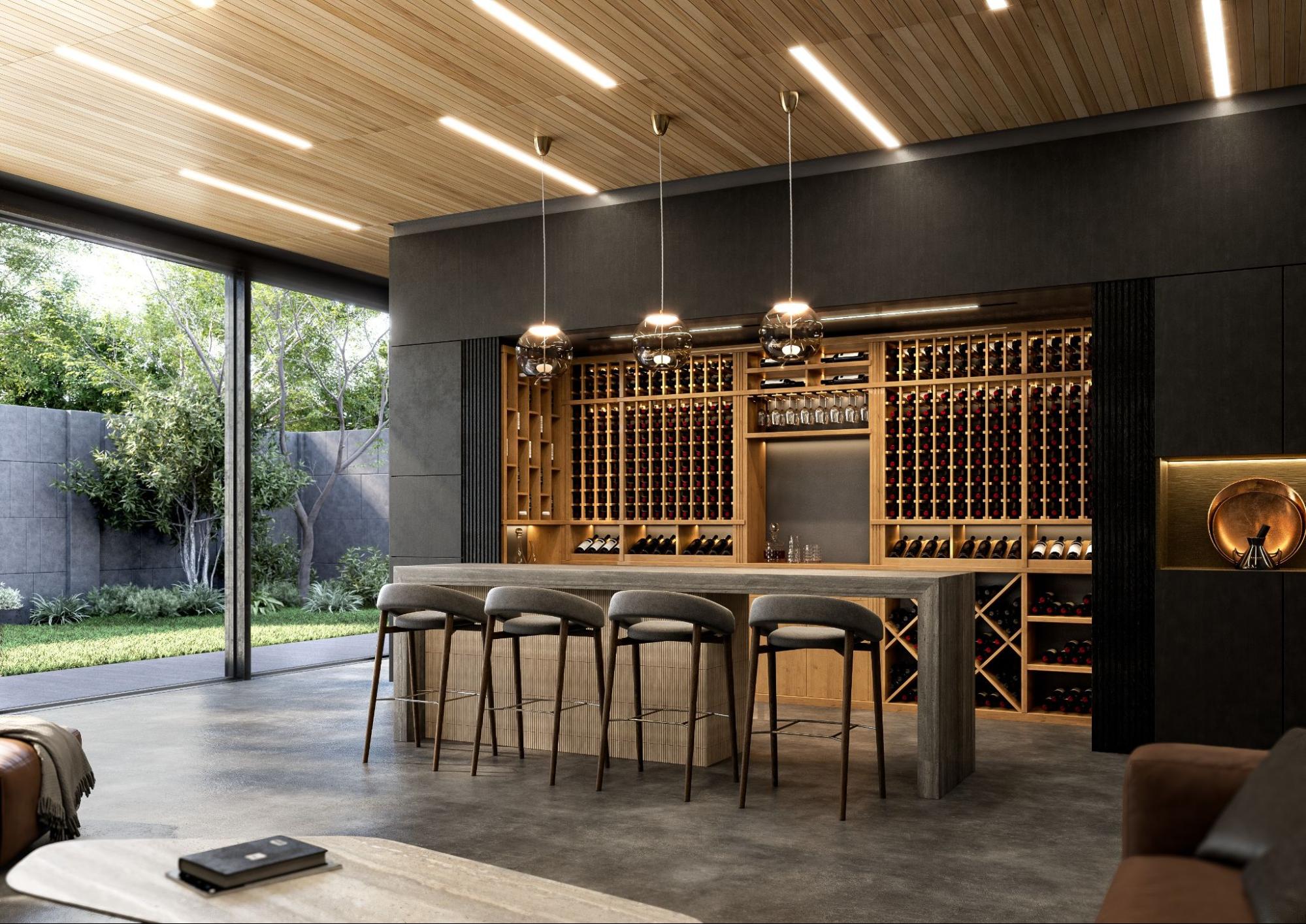
Designing a Home Bar That Fits Your Lifestyle
The best home bar design reflects the way you spend time at your residence. A quiet place to open wine after dinner needs a different plan from a cocktail station used for weekend gatherings. Start with the routine, then choose the layout, storage, and finishes that support it.
Good home bars also work within the surrounding room. A bar needs enough space to serve drinks and put tools away without taking over the kitchen, lounge, or basement.

How You Use the Bar Shapes the Design
Think about the drinks you serve most often and how many people typically use the space. A wine bar may need accessible bottle storage and stemware. A cocktail-focused bar benefits from room for spirits, mixers, and home bar accessories. Occasional hosts may prefer a compact setup that stays tidy between gatherings.
Casual Host vs. Serious Collector
For a casual host, the priority is easy service. A small bar cabinet, a few favorite bottles, and the right glassware can cover the basics. The Entertainer from Wine Racks America’s Bar & Beverage Collection combines bottle display with accessible storage for everyday bar essentials.
A serious collector must plan for capacity as well as presentation. Keep near-term selections at the bar, then use a wine fridge or a properly climate-controlled cellar for bottles held longer. The Reserve can create a substantial wine-and-spirits display for a larger collection.

Choosing the Right Home Bar Layout for Your Space
The best layout gives the person serving drinks clear access to bottles, glassware, and the counter. Map door swings and nearby seating before committing to a built-in bar, where a poorly placed appliance or drawer can make daily use frustrating. Measure the height of the bottles and glassware you plan to store before fixing shelf spacing. Champagne, tall spirit bottles, and stemware often need more clearance than standard wine bottles.
Wet Bar vs. Dry Bar
The decision between setting up a wet bar or a dry bar usually comes down to plumbing and serving needs.
- Dry bar: Has no sink or plumbing, making it a practical choice near a kitchen or in an existing living area.
- Wet bar: Includes a sink for rinsing glassware and simple cleanup, but it needs water and drain connections.
If a wine fridge is part of the plan, review the manufacturer’s ventilation and clearance requirements before enclosing it in cabinetry. Built-in and freestanding models may have different installation requirements.
For construction guidance, see our guide on how to build a home wine bar.
Small Spaces and Compact Bar Ideas
Small home bars work best in an alcove, at the end of a cabinet run, or along a dining-room wall. A bar cart remains a flexible option for renters or homeowners who want to move the setup. A corner home bar can also become a serving station without a full renovation.
Even a compact bar needs a small clear area beside the bottle storage or refrigerator. That landing space gives you a place to set drinks down while serving.
For a more permanent look, The Tower uses a slim vertical format for bottles and glassware. A countertop wine rack can keep a small selection visible, while floating shelves can display a few spirits above a compact counter. Browse these trending home bar storage ideas for more compact options.
Basement and Dedicated Bar Rooms
Basement bars can accommodate a larger counter, undercounter refrigeration, and seating without crowding the main living area. The Home Bar shows how modular components can create a built-in appearance while retaining flexibility for future changes. Leave a clear route between the serving area and seating.
Smart Storage for Wine, Liquor, and Glassware
A well-organized bar separates display items from backup supplies. Open shelving can showcase a small group of spirits or glassware, while lower cabinets and drawers keep extra bottles and tools out of view. Plan a place for:
- Wine ready to serve
- Spirits stored upright
- Everyday glassware
- Backup bottles and bar tools
Store wine and spirits according to their needs. Cork-finished wine bottles are generally stored horizontally, while liquor bottles should remain upright in a cool, dry place away from direct sunlight and heat sources. Check bottle sizes because Champagne and magnums need wider openings. Our comparison of wine cabinets vs. wine racks can help clarify the options.

Materials, Décor, and Lighting That Support the Room
A mid-century modern home bar may pair Walnut with clean-lined stools and a simple tile backsplash. White Oak can give a modern home bar a brighter, more open look, while Sapele Mahogany adds deeper color and warmth. Limit visible objects to bottles and glassware used often.
Lighting should make labels and the counter easy to see without making the room feel stark. Use task lighting above the work surface and softer light near seating. Wine Racks America offers wood storage finishes and modular components, while lighting should be planned separately.
Home Bar Design Checklist
Before finalizing a home bar setup, confirm that you have addressed the following:
- The main use of the bar and the drinks it needs to support
- Dry bar or wet bar requirements, including any needed plumbing
- Clearance for stools, drawers, and refrigerator doors
- Storage for wine, spirits, glassware, and home bar essentials
- A suitable wine fridge or separate cellar plan for bottles held long term
- Materials and lighting that work with the adjoining room
For a closer look at bar tools and serving pieces, see these must-have items for the ultimate home bar.
Bring Your Home Bar Together
Wine Racks America’s Bar & Beverage Collection offers modular pieces for wine, spirits, glassware, mixers, and accessories. Explore The Tower, The Parlor, The Entertainer, The Reserve, The Signature, and The Home Bar, then work with our design team to shape the storage around your space.
FAQs
How much space do I need for a home bar?
Home bars can range from a compact setup along one wall to a dedicated room built around entertaining. Measure the proposed location, then mark the counter depth and door swings with painter’s tape before choosing components. This shows how much room remains to serve drinks and move comfortably around the bar.
How do I build a home bar step by step?
First, define the location, intended use, and storage capacity. Then choose a wet or dry layout, confirm electrical or plumbing needs, and select storage. Built-in projects may require a contractor.
What’s the difference between a wet bar and a dry bar?
A wet bar includes a sink and plumbing, while a dry bar provides serving and storage space without a sink. A wet bar can simplify cleanup, but a dry bar is often easier to add to an existing room.
Do I need a wine cooler for a home bar?
No. A wine cooler is useful for bottles kept at serving temperature or in more stable conditions than an open room can provide. Compare freestanding and built-in wine coolers before choosing one.
How much does it cost to build a home bar?
Costs vary with the size of the space, plumbing, appliances, materials, and storage system. A movable bar cart or countertop setup usually costs less than a home wet bar with custom finishes and refrigeration.